2022: Financial year in review

I like to start the new year with a stocktake of how my finances are doing and whether my savings and investments went according to plan, then using this as a prelude to setting some plans and goals for the coming year. This isn’t the only focus for the year, so check out future posts to find out more about setting intentions, vision boards and the like. But it is a good way of gathering some baseline data to see where I am starting from.

To say 2022 was a tricky year financially is a massive understatement. Whilst the economy globally seemed to be strengthening post-COVID at the start of the year, the invasion of Ukraine in February turned a lot of the world’s certainties on their head. Prices started to go up for petrol, food, energy, leading to massive cost increases in the basics for most households.

This trend has continued throughout the year, with supply chain issues as well as scarcity in some areas leading to a crisis with the soaring cost of living. I feel like I’ve been writing about this all year: 92% of adults in the UK have reported an increase in the cost of living, with 60% saying they are ‘very concerned’ about their ability to cope with additional rises. Food banks in the UK had to distribute more than 1.3 million food parcels in 2022, an increase of 50% since pre-COVID figures. I recognise that whilst financial freedom remains a critical goal in my life, so many people are getting closer to the financial precipice that they really need to get support, and get it now.

Inflation also grew at a significant and rapid rate, hitting almost 11% in the UK by the end of December. For many people, including me, this had an immediate impact on mortgage interest rates, biting even deeper into the daily costs of getting by. Whilst the expectation is that inflation has now hit its highest point and will start to reduce in 2023, the impact (and uncertainty) of these shifts are real.

It has also been a shaky year for the markets. Again an understatement, with the Financial Times headline for the end of the year reading Stock and bond markets shed more than $30tn in ‘brutal’ 2022. Markets in the US had their worst year since 2008 (and we all remember what a brilliant year that was). Whilst I love FIRE and the focus on both balancing for risks, and keeping your head in the event of a downturn – and I have definitely moved on from panic selling in 2020 – it has felt like another rollercoaster ride which just hasn’t been that fun.

This has also been the worst year in terms of growth for my own portfolio. I made some major changes this year (more about this in future posts) to rebalance away from being over-invested in property, but continued to invest throughout the year in mutual funds and my pensions. I added in kids’ savings here which I don’t normally do, but as they are starting to get older I need to come back to my financial planning for them, and make sure I am adjusting as needed depending on their age and stage.

My investments this year came to almost £80,000, though some of this came from my property sale meaning that my investment from salary alone came to £50,000. I am extremely proud of this figure and what it represents in terms of prioritisation and tenacity. Since I have been working on myself over the last few years, I can feel that pride at the same time as recognising that my salary and privileges mean that I am in a very unusual and blessed position.

2022 Contributions
Personal pension (SIPP) £                   8,600
Savings (stocks and shares ISA, emergency savings) £                 31,000
Work Pension (pre-tax) £                 18,444
Mortgage capital overpaid £                   5,000
Kids’ savings (JISA, J-SIPP) £                 16,000
Contributions £                 79,044

Next steps for me are to do a review of my net worth (and realistically to not compare it to a US$ amount as I traditionally have – with the recent forex issues, this is a pathway to sadness) and set out some plans and goals for 2023. Whilst I do that, I will just continue to save and invest as usual, and get ready for what is hopefully an easier year for us all.

Look forward to hearing about your 2022 and how able you were to follow your financial plans given that major challenges during the year.

2022 FIRE Podcast Roundup

Firstly thank you for being here with me in 2022, and for joining me over on Instagram. In spite of a very challenging year, it’s been a privilege and a blast!

I’m so happy to be back with you after a much needed break, and writing this gentle post with some recommendations has been a nice way to return. But I am looking forward to much more on family, mindfulnesss, FIRE and much more in 2023.

I’ve been consuming a lot of content recently, and since it’s such a hit and miss process, thought it was time to share some links and ideas as to where to find more FIRE and mindful money advice. And with the end of 2022 just round the corner, it might also be the time when people look for something to get them in the zone for making New Year’s Resolutions.

FIRE is about so many things to so many people that it can take a while to find something that speaks to you – prioritising what matters in your life, living mindfully, rejecting bullshit corporate culture, or just being really, really rich – that you might need to dig to find what you need.

FIRE has definitely become part of more regular conversation over the past few years, but 2022 didn’t feel like there were many new contenders in terms of content creation.

I will focus on podcasts here, all of which work for people who are FIRE-curious, newly on this path, or much further along. Most of the books I read this year have been about mindset (and start ups – more of which soon) so I won’t include them in this post. I have stayed true to my three favourite podcasts which I listen to regularly, and whilst I have tried a range of new things, none have really compared.

Journey to Launch

Hosted by the fabulous Jamila Souffrant, Journey to Launch remains a staple for me.

She talks to her own experience of working toward FIRE goals as a mum, bringing on guests to talk about money, making consicous choices, building generational wealth especially in Black communities, and a whole lot more.

Journey to Launch is also active on Instagram (and she even replied to me once #fangirlscream) with real advice as well as motivational thinking.

Afford Anything

Paula Pant is such an OG in the FIRE space that she was one of the advisors on this year’s Netflix hit Get Smart With Money.

I love her mantra ‘you can afford anything, but not everything‘. Coming from a determined and mindful standpoint with your money and your life is more importnat to me in FIRE thinking than the end goals. Paula and her guests talk about this a lot, providing guidance and inspiration on mindset, decision making and prioritisation, and optimising what you have.

She is a property guru and whilst a lot of the advice there is for listeners in the US, the overall thought process is still inspiring. You can also find her over on Instagram.

Choose FI

The third go-to is Choose FI. This year, one of the two hosts left to focus on other priorities so it’s now fronted by Brad Barrett (who is always doing ‘quite well’ – an in joke you will need to listen out for from earlier episodes) along with guests.

Choose FI started as a community, aiming to provide crowd-sourced advice, and the community feeling is evident. I love the personal journey stories, especially when people come back on after months or years to update the audience on how things are going. The bumpy ride and unexpected turns that people go through are inspiring and comforting when your own journey takes some new twists. Find them on Instagram as well.

I hope you enoy them! What have you enjoyed or been inspired by this year? What am I missing? I love sharing ideas and content recommendations with the community so do flag whatever has been part of your 2022 journey.

Enjoy your New Year’s Day and I hope you are feeling inspired for the new year!

My father’s gift

Having written just a month ago about grief, I am devestated to say that my father passed away this week.

He has been ill for many months so it wasn’t a surprise. He went quietly as he would have wanted to: fell asleep holding my mum’s hand and slipped silently from this world during the night. We had a lot of time during his illness to share our love and our feelings with him, so he went having ensured that we weren’t left with ‘things unsaid’ – those things which can become toxic after someone’s passing.

A rainbow, picture taken by my daughter the day my father passed away. “Look,” she said “a little gift from pa.”

But it is still unimaginable to me that this world continnues to exist without him in it. I believe that he is with God, and that his spirit will live on – those that we have loved never truly leave us. So I thought I would use this post to celebrate that spirit and his life, and share some of the lessons he has given me over the years which I will take with me and keep sharing with my children.

  • There are some areas where you shouldn’t try to save money. Namely: books, wine, cheese. Books are something I try not to keep buying, partly so my home doesn’t end up with teetering stacks of books in every corner and partly so I can give up on a book I’m not enjoying rather than feeling the need to see it through ‘since I paid for it’. But I am prepared to rethink this one to pay respects to my dad.
  • Making people feel loved means seeing who they are and what they need. He came into my life at 14, becoming my step-dad. I call him my dad out of love and respect – and because that is who he really was for me. From the day we first met, he was someone who created a feeling of love and respect with such a simple grace, largely by really trying to understand who I was, how I felt and what I needed. And that effort and level of care was always the bedrock of our relationship, and meant that I could talk to him and rely on him for anything.
  • Then you show them that love. As a man born in 1939, my dad was maybe not an obvious candidate for showing emotions. But my kids and I have always felt supported on a kind of cloud of love and affection. When we were living overseas he sent a weekly package of cuttings from the newspaper (often with speech bubbles or other commentary so it was clear where he stood), letters, and little notes he had taken about things we’d be interested in. I find little cuttings, notes and letters, throughout my house: tucked into recipe books, or mixed in with the kids’ stuff. And I love to see them.
  • Poetry is not a luxury. He really loved poetry and is one person who consistently gave me books of poetry as gifts. It’s not something I do for myself, but every few weeks I pick up one of these books, let it fall open, and just enjoy the small, beautifully written treat within. I added this activity – poetry i-Ching if you will – into a list of ‘5 minute treats’ recently and I love it.
  • Love hard. It’s worth it. My parents got married after messy divorces on both sides. They learned to trust each other, and built a successful life and family. That’s a lesson worth learning.
  • Unconditional love is rarer than you think. My dad was the only person who cried with joy when I finished my PhD (apart from me but I cried with relief) and I gave them a bound version which referenced them in the acknowledgements. For my mum, it was too tied up in needing to compare my achievements with my siblings. But for my dad, it was much more simple: “You did a great thing. And I couldn’t be prouder.”
  • Cycling drunkenly into a hedge is a family thing. Don’t sweat it. (Just gonna leave that one there without an explanation!)

Grief is hard. Loss is hard. Relationships with our parents and family can be hard. Parenting and trying to get it right can be hard. But it’s not all hard, or not always. It’s a beautiful, tight hug from someone who really knows and loves you, whatever your flaws. A hug that you can still feel long after they have gone.

Thanks for being here with me at this difficult time. This blog is about all the things that make up a life, and grief and love are part of that. Now go and give someone a hug, or a call, and tell them you love them.

Pension planning

So I think a lot about pensions. Pensions are by far the biggest topic when I talk to women in the same sector as I am. Or single parents. Or anyone who has moved between jobs, or between traditional jobs and entrepreneurship. So, everyone really.

There are a few different schools of thought. Many younger people I speak to have such little faith in the pensions industry that they are not convinced of the need to invest in retirement vehicles. In fact one-third of savers don’t have faith in the industry – and this survey was done with savers, so imagine the additional people who don’t have faith to the point where they just don’t save. Almost 60% of people believe they will not have enough to retire on, with women being significantly less confident about their ability to retire at all, or comfortably.

Not totally relevant but much more interesting than pictures of currency notes and clocks. Photo by Ricardo Gomez Angel on Unsplash

I’ve written a couple of times about calculating what you need to retire on, and on working out across your own financial journeys, especially if you want to retire early, where you might have gaps in your income prior to being able to access pension funds.

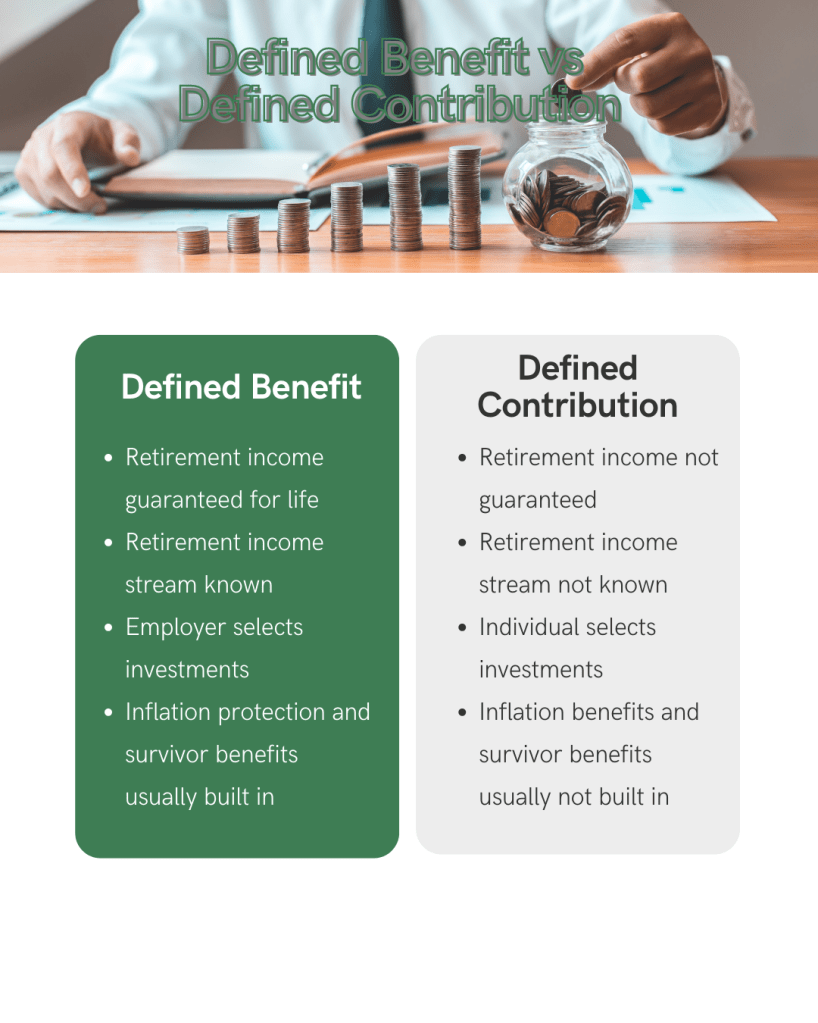
One tricky area to work through is the difference between defined benefit and defined contribution pensions. Sometimes I imagine myself on the Dave Ramsey show explaining at length why I don’t have $1million in retirement, and why that doesn’t matter because I am largely in defined benefit pensions. I realise that we have now plumbed the depths of my boring internal monologue, but putting that aside, let’s continue.

The first point is that defined benefit pensions are largely in the public sector, and they are increasingly rare. The second is that you will very rarely be able to choose which one you get. You may, if you are joining public service, be offered this option. And – whislt I don’t normally give unequivocal advice – you should always choose defined benefits for the reasons outlined below:

Some of the differences across pension type

Defined benefit pensions are usually linked to the length of service in the company, so it can feel pretty small or silly, but it all adds up. The greatest benefit to defined contribution is that a) you can choose where to invest the funds yourself and b) you can usually roll pension contributions into a single fund as you move jobs.

I have three defined benefit pensions, and one SIPP which I invest into regardless of how good my company pension looks. The figures below assume I stay in my current job for another two years: many defined benefit pensions require a minimum stay with the organisation. So how do my pensions look?

  Transfer valueAnnual guaranteed
income retirement
Defined benefit pension 1 £          62,304 £            6,250
Defined benefit pension 2 £          39,462 £            1,400
Defined benefit pension 3 £        104,864 £          15,266
  £        206,630 £          22,916
Self Invested Personal Pension (SIPP) £          44,075 £               400
TOTAL ACROSS ALL £        250,705 £          23,316

Even a quick glance suggests that the benefit from the defined pension is better than the defined contribution on the SIPP. However – and it’s a significant caveat – the SIPP will grow with the market. Or hopefully grow, in these days, who knows.

This is where it gets interesting. Using the more traditional FIRE rule of 4% withdrawal, to achieve the  £30,000 per year in retirement I would need to save £750,000 overall. Side bar – Mustachian Calcs are great calculators for working this sort of thing out. As you can see, I am not far off from that £30,000, and indeed would reach it if I could add in the UK State Pension (caveats galore!) but my portfolio ‘value’ is only around one-third of that net worth calculation.

Definitely more on this in blogs to come. It’s both a tangled old web, and a cornerstone of what we’re trying to do here. So do come back and join me on Instagram for more.

The Fear

Things seem pretty scary at the moment. Climate disasters, war in Ukraine, Ebola in Uganda, right wing shifts in Italy, significant remilitarisation in Europe, a soaring cost of living – I could go on. Having always been a political animal I now refuse to have the news on in the morning because it makes me want to go back to bed and just stay there.

Writing a blog about personal finance (and I mean that in the loosest sense) means that recognising the impact political and socio-economic changes have on people’s lives and opportunities is critical. There is a big difference between painting a falsely aspirational picture versus giving people hope and courage to try a different path and see how they can succeed in their context.

So I just wanted to take today to talk about The Fear and why it’s not unfounded.

100% faith over fear. But it takes a lot to say faithful in an unstable world when you keep getting kicked down. Photo by Sincerely Media on Unsplash

Personal finance is largely built on evidence-based faith. We look at the options open to us; historical shifts, values and movements; and our own future plans and needs. Then use all that information to triangulate the best options. I mean – this is what happens ideally. Sometimes we get hopeful, or greedy, and it’s more like a game of pin-the-tail-on-the-donkey. Sometimes we freak out, and it’s more like flipping over a table full of delicious food in order to hide underneath it. But in essence, making decisions means assessing what we think will happen, in our lives and in the markets, and trying to match them up with available options.

Take deciding to invest in the stock market. This is traditionally somewhere where it’s easy to be fearful, and decide not to get involved (caveat – there are other excellent political reasons not to do so, but that’s for another time). It is also a place where people are likely not to realise that not investing creates other risks around having their savings eroded by inflation. But intentional action always feels more scary than unintentional inaction, even where the impact might be the same.

Over a long period of time, the stock market has consistently gone up. As the financial planners say, it is time in the market, not timing the market that delivers results. Taking the graph below which models the sorry history of a fictional investor who puts money in just at the worst possible time, we see that he still benefits from compound interest and ended up with a 7.98% annualised return.

In other words, however disastrous certain moments were, the net result of investing in the stock market has been positive.

Modelling of a single, ill-timed (and imaginary) investor. Credit

The massive caveat here is that if the market crashes at a point where you need your money, you are screwed. And that’s where The Fear comes in. In the example above, if that investor had lost their job and been forced to pull out their savings to live off, or reached pensionable age and had to cash out an invested pension, they would not have won.

This is all aside from people freaking out and pulling their own money at the wrong time, like I did in 2020. If you are in a position where you must – either for reasons of perception or fact – have to take money out of the market at a time when it is down, you will lose.

This week I have been reading Nomadland (also a film). This amazing book charts what has happened to the “invisible casualties of the Great Recession”, largely older people who unexpectedly found that, in spite of investing in it for years, the American Dream would be forever out of their reach. There is more I want to reflect on about the changing nature of work – most of the people featured in the book will never be able to retire but are forced to work seasonal, temporary jobs – but that’s for another time.

Having a global financial shitstorm happen at a time in your own life where for whatever reason – divorce, illness, getting to an age where you are considered disposable – on top of all the other institutionalised inequalities that impact on people’s ability to make ends meet, can push you permantly to the bottom of the heap. Whils the stock market recovered from the 2008 mega crash, and people who were able to stay in the market have done very well indeed, 10 million Americans lost their homes. For those who lost their homes but were upside down on the mortgage or on other debt, they could spend many years paying for something they no longer own. Having to make money to service a debt for a dream they suddenly couldn’t afford.

So The Fear is real. It’s not to stop any of us from dreaming, or investing, or anything else. I still wanted to recognise how quickly things can go left: there are long term impacts that we can still see, and blithely ignoring the possibilities is just foolishness. I want to leave with these two photos from Detroit of a residential street 9 years apart, in 2009 and 2018. Detroit was one of the hardest hit areas during the recession, meaning there are a lot of streets like this.

It’s ok to be afraid and still look for ways to keep moving in faith: in fact, that’s maybe all we have. But remember that there are people and places which have been erased by these historical financial moments. And they won’t be coming back.

From a community to an overgrown pathway in less than ten years. Read the full story and see other examples here.

Grief, and strength

Damn it’s been a bit of a year. After ‘the COVID years’ it seemed things might get easier, but that doesn’t seem to be the case.

I’ve been offline for a week as I had to go back to the UK to support a family member whose wife passed away suddenly at 46, leaving him with two children. Suffice to say, it’s been a brutal week and I only hope I can support him during the long dark night of grieving and dealing with the practical and emotional challenges of becoming a widowed dad.

There are lots of relevant things I could write about (and might come back to): estate planning; making a will; or accessing benefits when your circumstances change. 1 in 20 children in the UK have experienced the loss of a parent before the age of 16 so whilst this is something none of us as parents want to think about, it’s common enough that we should be preparing for it, just in case. But all this stuff will have to wait whilst I ride out the sadness and be there for the family.

In addition to the loss of the individual, and the sadness around the loss her children in particular have suffered and what it means for their lives, I have a real sense of losing a shared history. Of course it’s not the most important thing, but when there are people whose lives have intertwined with yours since childhood, losing them is like a mini ending of an era. And for whatever reason, it feels like we have lost a lot of people so there is a sense of standing on a glacier which is slowly melting into the sea (awkward climate change image).

All our dreams and plans have foundations in where we come from and which families and communities we are part of. What I have learnt, as someone who moves and travels (phsyically and emotionally) a lot is that this is true whether we realise it or not. The comfort of being with people with whom you have not just a shared history but a shorthand or venacular is immense, and it matters so much to be able to just rest in that. No wonder losing it is hard.

The cost of having kids

This started off as two totally different posts but for whatever reason, I ended up wanting to talk about the cost of having kids. Clearly feeling grumpy about it!

Having kids is a huge fianancial commitment whether you are single or not: even a married mama will earn one-third less than male counterparts by the time her eldest is 12. Very often people focus on the cost of having kids in terms of the things we need to buy for them, which is honestly by far the smallest part of the equation. Lots of places list out the things you’ll need and how much they might cost but it’s not rocket science, and with the rise in great second hand equipement, doesn’t need to break the bank. I bought everything second hand (other than a car seat because you can’t guarantee it hasn’t been in an accident which migth render it useless, and cot or Moses basket mattresses since you there is a small chance that using a second hand mattress from outside the family increases the risk of Sudden Infant Death Syndrome or SIDS).

Clue: you need very little of this stuff. Photo by elliot verhaeren on Unsplash

I got many things for free, and did without a whole load of others which seemed unimportant. Then I made sure I passed on all my used stuff, from books and maternity wear to kids clothes, toys and books, to make sure someone else benefitted. Kids use things for such a short amount of time – though honestly they can also properly trash some things which are just unusable after a few months – that most things are good for another few years. So much of the things we purchase for our children end up as waste, with more than 2.2 billion pounds of clothing for children aged 0-11 ending up in American landfill each year: the equivalent of 45 pounds per child. 90% of toys are made at least partly of plastic, and 80% end up in landfill including things in good working order that kids have just grown out of.

Which is kind of ironic given that this wastefulness is bringing about the kind of climate change that means the lovely babies we are so proud to show off in a new outfit, or make smile with a new toy, are more likely than ever to end up living their adult lives at the sharp end of a fiery apocolyptic disaster. And even if you don’t believe in climate change (you probably shouldn’t be on this blog to be fair) or don’t care, the sheer wastefulness in terms of money and resources makes doing things differently surprisingly easy.
Not my child but what a cutie: Photo by Kiana Bosman on Unsplash

But these costs are nothing compared with the cost of childcare, and the impact on your career. And we haven’t even started talking about if you want to prepare them for college, or save up so they can have a deposit for a house. In 2020, 49% of first time buyers under 35 got help with their deposit from their parents, with the majority of them saying they wouldn’t have been able to buy a house without this support. So if you can’t help out your kids, they are going to get left further behind. Just in case you didn’t feel bad enough already.

Research (though I always think these things are a bit vague given the many different approaches you can take to parenting) suggests that the cost of raising a child in the UK is £193,801 for a single parent. Using that and the lack of financial support since their birth, I will have lost almost £400,000 by having children. According to some back-of the-envelope calculators, investing that in a low cost ETF or stocks and shares ISA would grow to around £700,000 in the 18 years. Add to that the reduced earning power, and having two kids has probably cost me £1 million.

Obviously, I didn’t have children to make money (child labour is illegal after all…) And this calculation doesn’t include the fact that they will look after me in my old age (which, thanks to our cultural background, they really really will). Having kids is awesome, and my two are both pretty much the best fun I ever have, as well as potentially being part of the solution to the problems my and my parents’ generation have created in this world.

Also not my kid, but a child quietly reading a book is something I fully support. Photo by Aaron Burden on Unsplash

But the cost of having children is real, and shouldering the burden alone can feel like a huge strain. Being part of the FIRE movement, where it feels like it’s predominantly white married couples who have nothing to do with my life (this was the other post I started writing) can make things feel even lonelier. But FIRE as an approach means that I feel in control or the spending and financial decisions I make, and more confident that I am creating the kind of future my kids, and I, deserve.

Frugal School Holidays #2

Carrying on from last week’s posts about the cost of school holidays and what I ended up spending, I wanted to share a bit more on what we actually did. I also shared activities and ideas throughout the holidays on this blog’s Instagram account: come and join us!

There was a big shift in my thinking this year for a couple of reasons. One of these is just the age of kids – a lot of my suggestions don’t work if you have younger kids who need a lot more supervision. I would say though that ages about 4-8 are the best for frugal holidays as long as you can take time off work to hang out with them (and that’s a big, big if). Now mine are 9 and 13, they have different needs and opportunities.

The other thing that changed for me was taking an active decision to let my kids get bored.

I have always been clear with them that their boredom is not my responsibility. But there is also tremendous pressure to fill our kids’ time with endless opportunity and stimulation. So much of the insistence that we have our children do so much outside of school is a concern that they will get left behind: without all the extra tutoring, music, sports blahdy blah they will somehow be less rounded, less competitive and overall less successful. If you are in a country where yours it not the majority culture, there might also be language or religious classes or community events which are important in making sure your kids feel their roots. That’s a lot of expectations we’re putting on our kids, and they are exhausted. And so are we.

An article in Psychology Today is clear that parental expectations, and a zombie apocolypse view of the world where missing out on the right college means Your Life Is Over is pushing parents to put too much pressure on their kids. As the article notes, whilst extra-curricular pursuits were a hobby or a chance to try new things,“each activity is now one more area for social comparison and thus one more possible source of stress and anxiety“. Another article sounded the alarm for the impact of this on children in terms of squeezing out valuable family time. A survey in the UK found that 90% of children went to after school activities 4-5 times per week often getting home as late as 8 or 9pm, meaning chances of meaningful family conversation, or a relaxed dinner where you chat through the day, are slim.

Internet suggestion for a photo of borderom 😀 Photo by Tony Tran on Unsplash

Aside from the existentialist question as to the future of Higher Education (which is a whoooole other conversation), cramming in so much to our kids’ days is putting huge pressure on them, but also onto us as parents emotionally, financially and in terms logistics and organisational skills. Especially when there is only one parent and no family around. I don’t want to spend all my weekends watching football or basketball matches (as a side note – don’t attend U11 basketball matches with a hangover. The noise will make you wish you were dead) or schlepping children across town for various activities. Often both of my kids will need me to take them somewhere, attend or support them or whatever, at the same time. And I just can’t.

So with all this in mind, I decided that we all needed a break over the summer. And this meant cancelling a long held plan to go to Kenya for four weeks (there were other reasons for this but actually it was something of a relief in terms of money and having to organise All The Things) and then sitting down with the kids to talk about what a more relaxed and frugal summer meant. I also had to work all but two weeks of the holiday, and travelled for work for parts of three weeks.

So this is what we did:

Getting the most of what we already own

Use holiday clubs when you have to. In previous years I used clubs to keep the kids entertained and busy. This year I only used them for when I was travelling, since they will have a nanny around to keep them safe and fed, but they need more in terms of things to do. My daughter did three clubs which were actually great – explorers, where they went out every day on the train and poked about Copenhagen; analogue photography where they learned to use cameras and to take and develop their own pictures and had an exhibition; and, more randomly, badminton and origami. She loved them, made some friends who then came to play at the weekend, and got out of the house. But the three weeks were definitely enough.

Take a chance to use what you already have. I feel like in spite of general frugality, we have a LOT of stuff. We got out a bunch of things which have been sitting around since we moved, putting up gymnastics rings and a ladder into a convenient tree, and finding badminton and tennis racquets for games in the garden. I threw all our ‘sand toys’ into the back of the car so they would always be on hand. We also spent a few days of my holidays going through all the stuff in my daughter’s room to get rid of clothes, books and toys which she has grown out of. This all went on Freecycle so other families will get to enjoy them, whislt she has a clearer view of things she actually likes. I also encouraged her to get out things she hasn’t used for a while or made time to play with: sticker and activity books, craft kits and so on, many of which were good fun over the holidays.

And doing the garden means saving money buying flowers!

Help them think of projects. We also sat down and came up with ideas of things they can work on when I am not there, using what’s around. We thought about things they can do when bored (reading, drawing, small craft things), and projects where I did buy some additional bits and pieces. My son worked his way through some focused phsyics and maths work (yeah, no idea where he gets it from), worked out how to set up a telescope he had for Christmas and spent evenings star gazing and looking up astronomy facts, and practiced his clarinet. My daughter learnt how to use our sewing machine and made clothes for her Barbies, looked after the vegetable patch in the garden, and researched and made bee and insect houses.

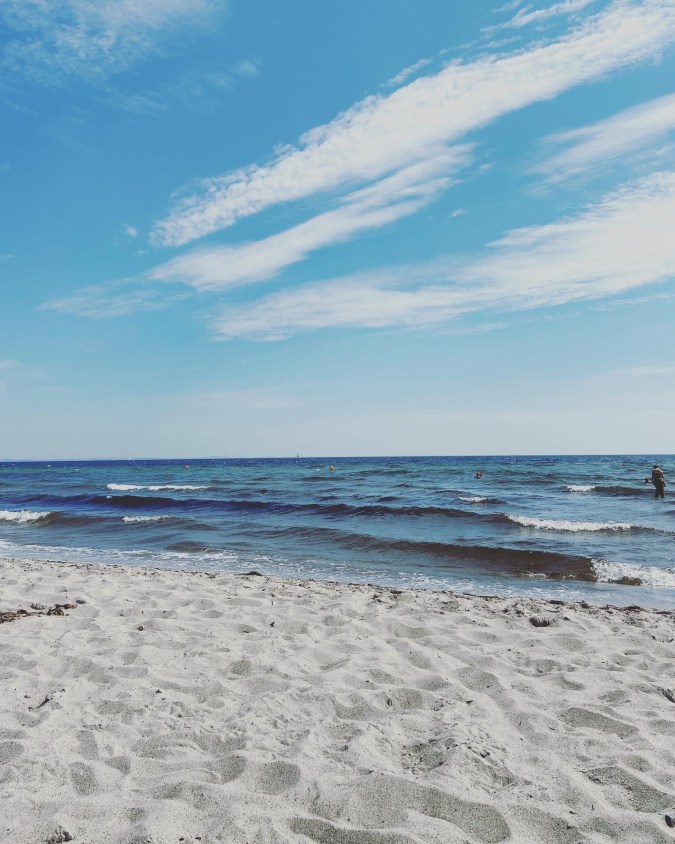
Think of stuff to do as a family. We did a lot this summer, but most of it free and none of it ‘thrilling’. We went to the beach many many times. Whilst we used to go for an hour or so we got in the habit of packing a picnic, rugs and books and making a whole morning of it. We walked in forests, around lakes, and all through the centre of Copenhagen which is a great place to explore. I have a couple of memberships we buy annually (to the Danish Architecture Museum which is super cheap and gives you free coffee and to an amusement park which is super expensive but definitely exciting) and we made use of them. We researched and cooked recipes which we hadn’t made before – I recommend doing this with one kid at a time if they are like mine – played boardgames, watched all the Marvel films we hadn’t seen before, and got into a podcast about political systems. It’s all individual, but my point here is that fun doesn’t have to be novel, or fresh or expensive. Treats and time together can be pretty simple.

But sometimes spending on a treat is totally worth it

Spend on things that do make a difference. Brunch or dinner out; a book or a two-month subscription; decent coffee – whatever it is that you will appreciate, do it. The flipside of recognising that throwing money at problems doesn’t solve them is realising that when you do spend mindfully, on things that make a difference to you, it feels that much sweeter.

That was our summer! We had a lot of fun, and saw a lot more of our city. The kids got bored, and got creative. I think we read about 20 books each (either from the local library where we visited weekly, or things which had sat on shelves unread for a while. We cooked, baked, gardened, sewed and played games. And saved a ton of money.

Frugal school holidays #1

Kids have gone back to school this week! Woo and quite literally Hoo! They really needed these 8.5 weeks (8.5! Seriously??) off as last year was crazy, including some health issues, all of us getting COVID, I was doing two jobs and permanently either out or stressed… So we all needed a bit of down time.

In 2020 I wrote a series of posts about the crazy expense of school holidays as well as sharing a ton of frugal ideas to enjoy them without breaking the bank. 2020 was admittedly different since lockdown had meant that the kids and I had basically spent months together trapped at home trying to work and homeschool, and I was pretty much out of good ideas for nice things to do together. Denmark had also just opened up, and we were desperate to get out of the house and into the big wide world in case it shut down again.

Spending a LOT of time on Denmark’s fabulous beaches (though wishing they were a bit warmer…)

But it meant that I spent £4,065 in addition to our regular spending during the 2020 summer holidays which feels ridiculous. Managing long school holidays is a challenge for all working families, but for single parents where household income is lower, and there isn’t an option to tag team between parents using their annual leave it is a huge problem. My father has long term worsening health issues which meant he had to shelter in place and now needs 24 hour care, and whilst in previous years I would usually either take my kids to stay with their grandparents for 2-3 weeks, or have my mum come and stay with us, this hasn’t been an option since COVID.

In the UK this year, thanks to the number of companies which went out of business during the pandemic, summer childcare has risen by as much as 25% in some places and with fewer spots available options are likely to be further away and cost more in petrol or travel. Overall research suggests that parents will pay an average additional £900 per child for the summer holidays if they cannot take time off work. Given that single parents already earn significantly less than others, and that 75% report that childcare costs are greater than their basic living costs and one-third of working mothers say that their childcare costs are the same as or higher than their salary

Easier to find things to do when the weather is like this!

From a personal point of view – and recognising that being on a relatively high income and with basic childcare options that continue in the summer – I knew that this year I really had to do things differently. Last week I wrote about commitment to paying off a bridging loan, and since I was horribly aware of the financial vortex of the summer holidays, I made a clear decision and plan to have a frugal holiday and put that money against the loan. (If you havn’t read the post, I paid off £25,000 plus interest in 19 months, and the final £5,000 came from summer holiday choices).

I tracked additional spend during the 2022 holidays. I didn’t count our regular childcare budget of £800 monthly – since I employ a nanny due to my work hours and travel needs, I need her all year round. I also didn’t count usual supermarket or travel spend on our train cards though I did include two supermarket shops which were clearly for treats. So I included holidays clubs, days out, money spent on books, subscriptions etc specifically for the holidays, the cost of a ‘self care day’ which I had as a day’s leave, and eating out since it’s something we don’t usually do. In total I spent an additional £1,377 over the school holiday period – or one-third of the cost of the 2020 holidays.

Books, website subscriptions etc £    100.00
Holiday club x 3 weeks £    886.50
Day out expenses £    192.10
Eating out expenses £    113.00
Self care day £      85.32
TOTAL £ 1,376.92
Additional costs for the holiday period
SO MUCH BEACH!

Next week I will share more on what we actually did – and on how I learnt to embrace boredom and unmanaged time as something critical for my kids’ ability to navigate this world.

I also tracked some of the frugal ideas for the holidays over on this blog’s Instagram page, come join me if you want a sneak peek!

Commitment #2

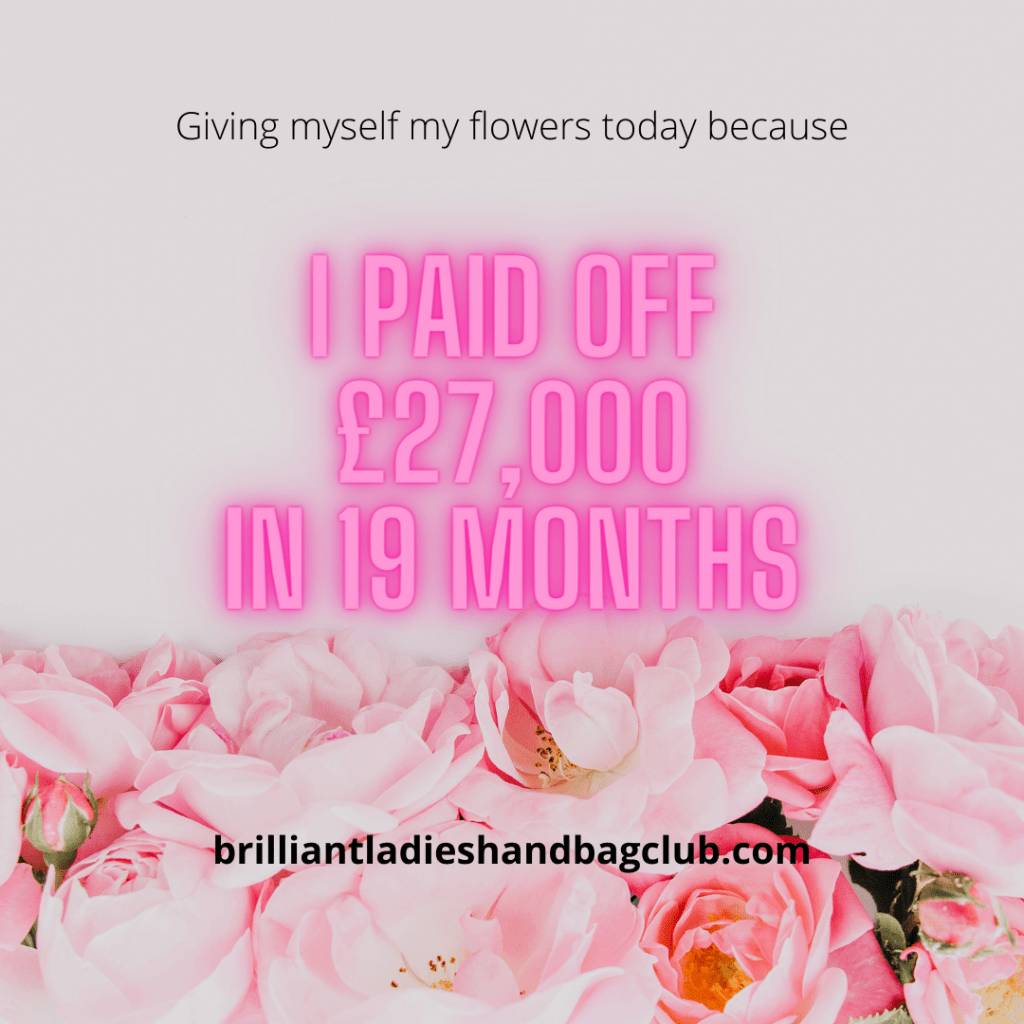
Last week I posted on my Insta about paying off £27,000 in 19 months and I wanted to talk about it in a bit more detail here and how it relates to my thinking on commitment.

Generally I don’t carry debt. I appreciate there are a number of schools of thought on this one, especially about ‘good debt‘, credit card benefits and so on but for me it always comes back to the kinds of risk I am willing to take (TL:DR – not many, usually based on complex zombie apolocalypse scenarios where I can’t look after my kids).

But when I was buying a house last year it turned out that I couldn’t bridge the gap between my deposit and the mortgage. I had 10% as a down payment but needed more to be able to access the financing. I had already scrimped hard to get the downpayment together and, with fees and costs associated with moving, just couldn’t make the rest in the right time frame without leaving myself with no emergency fund at all. So I took a bridging loan, just as a personal loan from my regular bank.

I figured that adding it as a risk to the overall house buying approach should work. Photo by Ingrid Martinussen on Unsplash

But in taking out that loan I made a commitment to pay it off as quickly as possible. The total to repay including interest over the original 60 months was £29,349 for a £25,000 loan. This felt like more interest than I was willing to pay, and was definitely a spur to get it out of the way. My original monthly payments were £500 per month, and with this rate I paid back £1,400 on average every month.

And now, aside from mortgages, I am debt free again. And it feels like a huge weight off my shoulders.

One dictionary definition of commitment is an engagement or obligation that restricts freedom of action. For me, having this loan restricted my actions in other areas, which was interesting since I already thought I was quite frugal:

  • This is the big one – no holidays. I value travel and connection with my kids and our worldwide family but I cut it out for this period other than going to visit my sick father. Everything else felt like it could wait. So one month in Kenya long planned for this summer got cancelled and that money paid off the last £5,000. Interestingly planning this trip also raised issues of commitment about how others were showing up (or not) for me, which made the decision to cancel a lot easier.
  • A ‘squeeze tax’ on most of my other spending. Basically this meant reducing groceries and other discretionary spend by about 10%. It also showed me what the space is in my budget, though I am aware I don’t live that close to the knife edge anyway. I added in two additional meals a week to be prepared on a Sunday meaning I could use up odds and ends, use the slow cooker, and generally remove the temptation to nip out and spend more money on food as the week headed to Friday. Ditto with packing lunches for the office. And clothes – I spent around £120 on clothes in this total period for all three of us.
  • Cancelled all subscriptions. All but one. I used to regularly check I wasn’t being charged for things I didn’t want, but here I cut out everything I didn’t actively value.
  • Got energy from freaking out. I have been writing about the cost of living crisis which we are all freaking out about, whether a little or a lot. I made the decision to take the loan when I could easily manage the monthly payment, and looking down the barrel of rising prices everywhere, made me really conscious that I needed to tighten down my commitments.

The take away for me was that through commitment all things are possible. This isn’t going to be true if you are already living close to the breadline, but for many of us on the FIRE journey, our ability to squeeze more out of our budgets depends on where we are trying to go. I have never quite managed to find the same drive for investing and saving as I found for paying off this debt which is showing me some interesting tactics and opportunities to get better (or clearer) at getting inspired in those other areas.

So I feel pretty proud of this. Being able to commit to something, and see it through with very minimal support, really keeps me confident of my ability to chart this path, however much it changes along the way. So stay committed. Stay focused. Sometimes restricting freedom of action can feel limiting, but remember that you have a bigger goal in mind.