No blog post this week, apologies. If you have been over on my Insta then you will have seen that I’ve been busy both dealing with, and coming to terms with, some family stuff.
This week is also Pesach (and Easter and Ramadan) and the school holidays, plus I have a ton of work on so overall, it’s a lot. But it has been an important week for me thinking about all the things that really matter to me, to us as a family. Not just in terms of what the future holds, but what holds us.
Wishing you all a great and peaceful week. See you on the flipside.
Ah here we are again. In the inexplicable British system (is it to do with an old byelaw about swords? No?) the tax year runs from 6th April, so this time of year always feels like a time for a fresh start. It might feel more like this if it would stop snowing and really get on with the business of Turning On Spring but let’s see. Oh, and it also means a bunch of work, but we’re here for that too.
So what are the things you need to be thinking about?
As with all new year’s exercises it boils down to wrapping up last year and preparing for the next one. There will be some major changes to be aware of for the 2022-23 year, thanks to Rishi Sunak’s budget but if you want fuller details of what those are I suggest you have a look at this fuller list of upcoming tax changes and what they might mean for you. Basically – he has likely done you no favours. In a post in 2020 I actually used a picture of Rishi but this year I can’t do it, even ironically. It feels like we are all being pushed too close to the financial brink to find any of this funny any more.
My main focus today is on the wrapping up at the end of the tax year. This means two things: preparing for my tax return and looking back on how I spent, saved or invested my money. This week I will focus on prepaing tax returns, in order to get the boring stuff out of the way first.
Prepare for your tax return
Caveat: Firstly, I am not a financial advisor (pretty obviously, I mean my personal finance Instagram is mostly pictures of Barbies or food). There are lots of people out there who can help you with all the details of your taxes, and I am not one of them. But I am sharing my own approach here because why not.
Secondly, not everyone needs to do a tax return. However if you are the following then you do:
You are working for yourself – either as someone who is self-employed or someone who makes income from additional sources to their regular job which is not taxed elsewhere, e.g. from rental income;
You are a partner in a partnership business;
You are a minister of religion – any faith or denomination;
You are a trustee or the executor of an estate.
If you are unclear, the best thing is to consult an Independent Financial Advisor since getting it wrong in either direction could cost you a lot of time and stress.
Spring is in the air, though taking its own sweet time to arrive…. Photo by Arno Smit on Unsplash
As with so many things in life, the best time to start preparing for your tax return is this time last year. No really. The easiest way to do your taxes is little by little, so if you can get cracking with a simple spreadsheet and way of monitoring income and expenses, your life will be so much easier next year.
Of course the complexity of your tax directly relates to the complexity of your income. I have income from employment, from a rental property, from savings interest (but not dividends which have separate rules), and some overseas stuff plus I also pay into a personal pension which has its own tax benefits. So I need to complete four forms. HMRC really are the best place to start since their factsheets and whatnot are actually quite helpful. Another great thing about getting started early is you can call HMRC and ask them questions before they get closer to the 31st October deadline for filing paper forms and start to have a collective breakdown.
HMRC – surprisingly helpful if you get in early. Photo credit.
So the first things to do are to make sure you know if you need to file a self assessment; and if so, what forms do you need to complete. Once you have that, you can pull together all of your paperwork and start ploughing through it. You will need to know what expenses you can claim, and make sure you keep copies of all relevant documents.
In terms of when and how you get organised, you can do what I do and have a personal date night once a month with all my financial paperwork and a beer and just get it done. I do feel a little bit squirmy and sad saying that, but I find it so much easier than getting in a panic once a year. I also have a friend who has a week long retreat with her tax return and uses it as a way of engaging with gratitude for the year that has past. Whilst I absolutely love that as an approach, it’s not for me. So – as with every element of personal finance – go ahead and find whatever works to make the process as simple and painless for you as possible.
Even in your tax return.
See – I managed to talk about tax returns without making a joke about Rishi Sunak’s family circumstances. So anything is possible!
What are you going to do today to further your personal or financial journey? Whatever it is, I hope it will be full of joy.
Quick reminder to come and join me (and the FIRE community) on Instagram @brilliantladiesmoney. At least join once a week for the Friday Banger – music that inspires me on my journey – definitely my favourite moment of the week. From Sauti Sol to Sizzla (plus artists who don’t begin with S), it’s all the tunes that get me back on track.
Unsurprisingly, most non-FIRE retirement discussions focus on investing in pensions. Paying into pensions is a tax efficient way to save, and has the added benefit of hiding your money from yourself so you can’t change your mind about your future plans and spunk it all on a beach house. But the early retirement gap is the time between quitting traditional employment and being able to access your pensions.
Looking at my portfolio really showed how critical this gap is. Since my assets are heavy on real estate and on pensions, there is a gaping hole in the middle where more flexible options should be. Add in the need to wait for pension income, and it might be time to rethink the plan a little.
So I went back to basics in terms of what I will need and when, and mapped out income against it. This resulted in a long and complex spreadsheet which I won’t share here but started from the premise of living until I am 80. I already wrote about being at the ‘tail end’ or probably half way through my allotted time on this earth – and I would caution that you think about this stuff when you are in strong existential form as I found it quite depressing. Anyway – it’s infinitely less depressing than not thinking about it and ending up broke, so here we go.
You will see I put in some assumptions and I wanted to unpack two of these a little. The net result though if I follow my plan to retire at 50 is three years where my expenses will still be super high, then 15 years of gap until pensions kick in.
The impact of having kids and the choices we make. I don’t know where I would be financially if I hadn’t had children, but without them I could already retire on my current portfolio. I wouldn’t change them for the world of course – this is purely a financial observation. If you want rantings about how the system is stacked against single mothers, then pretty much the rest of the blog awaits you.
One big question though for the next phase is about whether I support my children through higher education, assuming they want to go. I have already committed to putting them through private schools, most of which is based on the fact that we move country every three years and need some consistency. Part of me absolutely wants to make sure they get through university debt-free. Whilst debt levels in the UK is still nothing like the USA, it is heading in that direction. On the other hand, with the right money mentality and guidance, there is nothing to stop them getting scholarships, working and managing what debt they had to get through on their own. The FIRE community tends towards the latter, with Mr Money Mustache in particular being vocal about both reducing costs for college and letting your children use the tools you have given them and find their own way.
I looked at the most basic costs for a UK college education and it would add around £20,000 per year per child to my expenses. Because of the age gap between my kids, I would need to cover this for six years, three of which are after my planned early retirement date. So that’s likely £120,000 in total that I would need to earn in that period in order to cash flow it.
In some ways this is a conversation that will never end though – will I help my kids buy their first house, look after their kids for them, whatever else? Or just focus on not being a burden to them and help out when I can? It is one of the times I hate being the only parent giving financial support, because whilst I don’t want them to miss out, it’s a lot.
Will an Oxford education even still be relevant in the future? Photo by Ben Seymour on Unsplash
Pension dates and what the future looks like. This is another interesting question which I never really thought about until I hit 40 and my future as a creaking elder suddenly felt a whole lot closer. Most of the US podcasts on FIRE assume that pensions kick in from 59.5 but in the UK – at least with pensions in any way connected to the public sector – pension age is 67. This really does add a lot of years that have to be covered by investments or income. By the time I retire, this could easily be 70 years old. Public sector pensions may be great because they are defined benefit but they are also pegged to the national pensionable age so there is a chance these will all shift to be much later. And pensionable age continues to increase, as the overall population ages and there are more people drawing pensions than paying into them. Which I understand but it’s hard to plan when the goalposts keep moving.
I have also bravely added in the UK State Pension which I struggle to believe will exist as anything other than a means-tested benefit by the time I retire. And whilst at £716 per month or £8,592 per year, it’s not enough to live off it would make a significant difference to how much I need in my overall portfolio. However I hold it very lightly as a possibility in spite of paying tax and NI for my whole career, even the overseas year. We already have ample evidence that the UK Government will not hesitate to shaft women (and by shaft I mean change the age at which they can access their pension with almost not notice, then underpay women £1 billion and not even bother to try and clear it up) if they think they can get away with it.
Planning for the sunset years <cries in Young Person> Photo by Jason Blackeye on Unsplash
So that is how it looks. The gap is real but thankfully there are a number of ways to think about filling it without having to stay in full time employment – more on that in a future post. For now though, working out exactly what this looks like and what the options are makes me feel more confident about making movements.
What does your early retirement planning look like and how are you thinking about future support to your kids?
Aw, happy Mothering Sunday! This week I am full of exhausted rage, and wanted just to focus a little on what it feels like to be a single mum, and why generalised negativity from society, the media and government policy is harming this generation of children.
First though I want to recognise that Mothering Sunday is a day which can set off lots of different emotions depending on your own particular track and relationships, but either way, it’s getting warmer and hopefully you’ll have something nice on this weekend.
Being a mother is a privilege and a joy, let me say that first off.
But it is also bloody hard. It’s hard for everyone, even those who have a partner. As we have moved away from traditional societies (and in fairness all the rubbish things that they required), the safety nets of support have been removed.
The invisible workload of mothering (yes, mothering rather than parenting, unless you are a single dad – recognising it and owning it as gendered is a feminist position) is exhausting. There is a great post from 2018 called ‘the invisible workload of motherhood is killing me‘ which, of course, I only just found time to read because I am too damn busy. Its is an accurate and helpful portrayal of what parenting looks like – and it’s just the day to day of parenting, not what it looks like to be trying to reach FIRE, or date, or anything else at the same time.
Motherhood is in any case fraught with issues. There have been a host of articles about how fatherhood has changed during the pandemic and how dads are starting to appreciate the ‘whole’ of parenting. But this is against a background in which women are expected to take the domestic burden (unless someone chooses to step in), and in which those dads have been able to refuse to engage until they were locke at home as well. Women are expected to work as well, though by the time a woman’s oldest child is 12 she is likely to be paid one-third less than male counterparts. These days, with the cost of living crisis and lack of affordable childcare, so many low income families are struggling.
Triple chocolate brownies, the Mothering Sunday gift my 12 year old son made me ❤
On my FIRE journey, earning less, and being responsible for each and every cost in the home, has a significant impact on the timeline, and likelihood of becoming financially independent. It’s not like there aren’t exceptions of course. But the system is stacked against single mothers, and in my experience, also has no sympathy for us. The impact of these collective issues on generational wealth cannot be ignored and it’s likely that our children will also struggle, however hard we try.
I was particularly triggered this month by an article about the failings of the Child Maintenance System which is a UK body aiming to ensure that children’s costs are fairly shared after divorce or seperation, and that any alimony is paid in a timely way. To quote the article – 90% of single parents are women… Half of single parents and their children are consigned to life below the poverty line, a penury that 60% of them would escape if fathers paid the maintenance due. The comments on the article went in to the predictable bun fight about access and custody arrangements, as well as not really understanding that maintenance is for the children, not the ex-spouse.
So in addition to the structural arrangements in which I earn less and have more responsibility, I am also supposed to do it alone since the legal system really doesn’t give a shit about holding both parents to account for the financial side.
I would be furious, if I wasn’t so tired.
I have been hyper-aware this week of why I am overwhelmed. And it’s two things – first, the sheer magnitude of All The Things. Work (so, so much work), kids, feeding everyone, administration of the home, family and friends, and anything I need. Secondly, it’s the constant mental engagement – the ‘invisible workload’. Planning, organizing, working around, being in communication, trying to soothe, calm, engage, nourish and play. I have been dating someone who does not have children, and whilst he very loving and caring, he cannot even begin to fathom what responsibility and busyness looks like in my world. That makes me just try to hide it all so he isn’t bored or put off: and that becomes something else I have to be responsible for.
But you know what – parenting absolutely remains a joy and a privelige. I would just enjoy it more if I wasn’t expected to run on empty all the time. Big up all my single mamas this Mothering Sunday. I see you.
I’ve been writing a series of posts about what it feels like to reach a net worth goal and also what it has made me reflect on in terms of what you actually need to retire on. This post is an exploration of my portfolio and what it means to me, both now and around next steps on planning. Do come and join me on Insta where I also look at my day to day actions and thoughts on all these things (and some more random stuff as well, let’s be honest).
So, what is my portfolio built up of?
It’s made up of three different areas, each of which has its own story and function.
Pensions
£ 234,973
Savings
£ 39,207
Property equity
£ 443,497
TOTAL
£ 717,677
Net worth as of February 2022
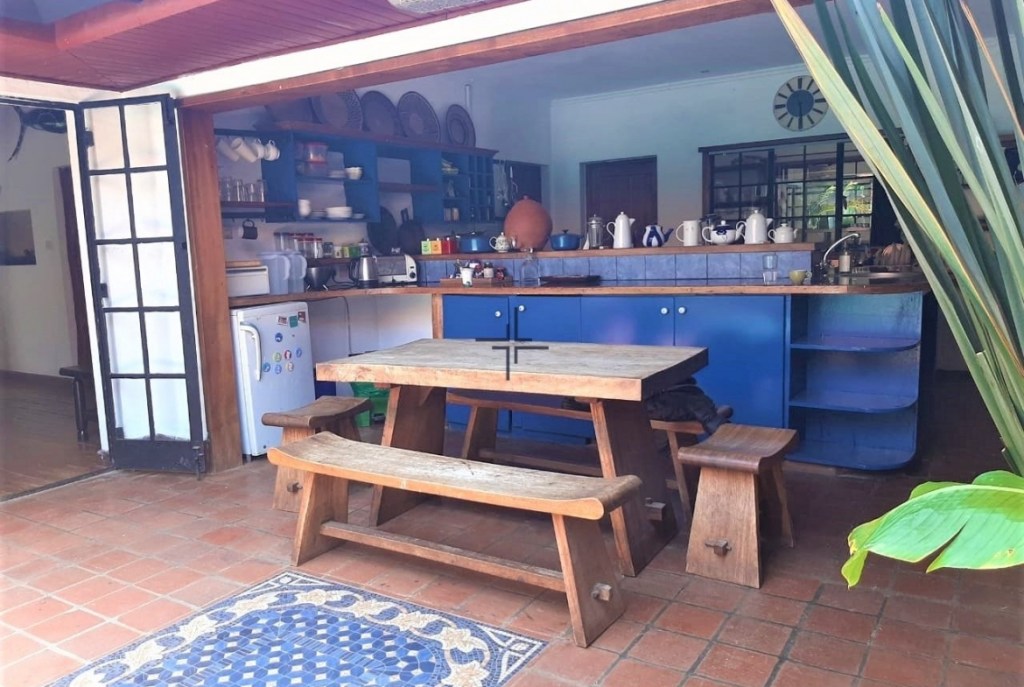
A lot of my net worth is property equity which is not really accessible but means I can dream about living in a fabulous house like this on in Nairobi…
Property
So 60% of my net worth is property equity. This is across two homes. I rented out my main residence in the UK when I got a job overseas and it is still tenanted. This means that the interest rate isn’t great (abot 4%) but I have focused on paying off this mortgage as a matter of priority. That’s based largely on my risk appetite (AKA terror of losing my job and making my kids homeless) and whilst I realise it might not be the most rationale approach to wealth building, it gives me a sense of comfort. I had a huge deposit from the sale of my previous home, so the mortgage was only £156,000 to start with and I have paid off £111,000 in the past six years.
This property is also my only passive income stream, bringing in £1,250 gross, or about £900 net of all costs since I have a letting agent manage it and of course have to ensure that everything is in good working order.
My second property is the home that we live in in Denmark. I wrote a lot about the decision to buy, and then about freaking out about the cost of property here but on balance I still think it was the right decision. Aside from the ridiculous cost of rent, the housing market is crazy at the moment and I have friends who cannot find places to rent. So again – it’s not just a financial decision but one about stability.
I don’t try and overpay the mortgage on this house. Partly because it’s so huge I just won’t make a dent, but also because we will sell this when we move country again. So since housing is a significant monthly cost, I just pay it and hope that I get a return on investment that is better than paying rent to someone else.
I am interested in having more of a property porfolio but it’s so hard in the UK. I listen to a lot of great FIRE podcasts from the US and everything – from the financing, to the market – just seems miles away. There are also ethical issues, in both directions, about being a private landlord but that’s a post for another day.
Savings
The result of buying a second home though was that my savings and investments took a massive hit. I went from almost £100,000 in savings to around £20,000 which I have built back up. That amount includes my emergency fund of £10,000 and the rest is in a stocks and shares ISA.
This is the area that I really want to focus on as there is so much room for growth. I also feel very property heavy in terms of the portfolio overall, and it’s money that just stays tied up.
Whether you’re saving for a rainy day or a cloud forest holiday, this is the most flexible part of your portfolio. Photo by Vlad Bagacian on Unsplash
Pensions
So this is the confusing area I think. Most of the FIRE community talks about total pension pots, and for me that is around
But the majority of my pensions are defined benefit which works totally differently. Have a look here for a simple explanation but basically, defined benefit means that the pot doesn’t really matter: what I will receive as a pension is guaranteed. This is a great place to be in lots of ways, though it is limited in terms of flexibility. I can’t, for example, decide where those pensions are invested. But in terms of security and planning they really work.
So what is interesting is not so much the overall pot as how much each one will pay out in retirement. The figures below show both the current pot value calculated as the transfer value (what I would get if I cashed out or wanted to move it) and also what it’s scheduled to pay out. All of the defined benefit schemes pay out when I am 67, so I also need to focus on what could be quite a long period to bridge if I want to retire at 50.
One thing to note is that the third pension pot will pay that out if I carry on contributing at this level for another two years – if I leave the job before then, they just pay me out the transfer value. So I need to stay here at least a bit longer!
Pensions
Transfer value
Pension on retirement
TOTALS
£ 234,973
£23,316
SIPP
£ 42,983
£400
Defined benefit pension 1
£ 39,462
£1,400
Defined benefit pension 2
£ 62,304
£6,250
Defined benefit pension 3
£ 90,224
£15,266
You can see from this that they aren’t all equal. Each one has a totally different rate of return.
It does make me question the value of investing in the SIPP, as works out as a 1% rate of withdrawal which doesn’t seem that smart. Once I lock in my defined benefit pensions, I might stop this one and focus on saving and investing in other ways.
So that’s it. There are other very small pots in there like crypto but these are the real pillars of my financial plan. I do need to think about rebalancing them but for now I will end on a picture of the kitchen from that same house – because dreaming big is what it’s all about.
Last week I wrote about how my net worth is now $950,000, and how I was feeling about it. Do come and join me on Insta where I tell the same stories but with a lot fewer words, and with photos of Barbies. What’s not to like?!
This week I want to talk through what the limitations of my net worth are. Not because I’m ungrateful or want to scare off people who are much earlier on in the journey, but because there are impacts to how we organise a portfolio which means that net worth doesn’t necessarily tell the whole story in terms of what I need to retire on.
So let’s go back to basics. The FIRE approach to early retirement takes as standard the 4% rule: basically, you need to save 25 times your annual financial requirements, then you will be able to withdraw 4% each year in a way which will keep you going for at least 30 years.
There has been a huge amount of discussion on this in the FIRE community and outside. The 4% rule comes from the fairly standardised view of return on investment in the stock market. The S&P500 for example has an annualised return rate of 7.5% over the past decades. So if you assume inflation gobbles up 3%, you’re left with 4% that you can withdraw before impacting on the capital.
Right now, there are commentators noting that the 4% rule might not work as well in future, as the stock market goes into a period of instability (or, you know, total global apocalyptic meltdown). Others point out that, on balance, the markets always right themselves eventually. At the point of drawdown though the issue is this – if you are retired and you need to spend out of your portfolio, you can’t wait for the market to resettle, and you can’t withdraw based on an average. So if you need to take money at a challenging time when the markets are down, you will either only be able to take out less, or it will diminish your capital.
As an aside, if you are new to this journey you really don’t need to know everything about the stock market but you might want to explore a little – I love Paula Pant’s recent basics guide.
Enjoy yourself! Either by talking about the stock market, or by planning your fantasy life when you retire. I know which I prefer… Photo by Jay-Pee Peña 🇵🇭 on Unsplash
(Side bar – I do my financial planning in GBP£ but calculate my net worth in US$ because it looks better. I know, I know, the games we play with ourselves…)
The reason this matters is because it has a significant impact on how much you need to save in the first place. I worked on the basis that I need £30,000 per year to live on – there are a lot of assumptions and years of budgeting behind this, but broadly, it works. Which? have a fascinating annual survey of how much retirees spend annually, and they calculate that £31,000 per year is enough for a single person to have a ‘luxury retirement’. But this assume the person is older, without the need to financially support children or their own elderly parents. It also says that spending on food and drink dramatically decrease and let’s face it – that’s not going to be me.
To withdraw 4% and have this be £30,000 per year in retirement, I would need to save 25 times that amount. So 25 x 30,000 = £750,000 ($975,000), which is very close to where I am. Using a more conservative approach would suggest using the 3% rule instead, or saving 33 x 30,000 = £990,000 ($1.23m).
There are lots of caveats to this in terms of how you do your planning and what it means, but it is also a stark reminder of where the mindful money aspect comes in to play. It sounds obvious, but the more you want to spend in the future, the more you have to save now. This also means looking at paying down debt, or paying off your home: basically balancing your expenditure with your planning.
Gather up your courage and do your calculations. Big Shaq is with you!
That means that the first and most important step is to know your numbers. Next week I will walk through my portfolio and some of the challenges in calculating an early retirement age, especially around accounting for defined benefit pensions, and deciding how to treat buying a house vs renting, as well as understanding what each of these options means in your planning.
Until then, I hope you enjoy working through some of your numbers. I’d love to hear from you, here or on Insta, about how it’s going and whether there are any more hacks and ideas I can help with.
Don’t forget to join me on Insta! Loving the conversation and energy over there.
So I have missed writing this blog for two weeks. This seems like pretty poor form, especially so early in the year, but honestly it was an act of radical self-care. I was in Kenya for work and took some time to connect with friends and loved ones, and really think about where I’m going. It also made me look back on where I have come from, so this post explores some of the feels I’m experiencing about getting so close to another net worth goal and what it all means. TL:DR – it’s not what I expected.
Lots of people are finding things hard at the moment. The world is (I was going to say ‘feels’ but let’s cut to the chase) unstable and scary; we’ve spent two years away from normal connections; the cost of the day to day is soaring – basically, it can feel like we’re all screwed.
View from my window this morning. No matter how bad, the sun still rises.
I’ve written a lot about gratitude but usually as more of a warm fuzzy rather than an actual practice. But gratitude is the antidote to stuckness, anxiety and fear, so when it feels like the world is screwed it’s the obvious place to go. Then someone on my Facebook asked – is there even any point starting a FIRE journey after 40? After taking a minute to feel sad about all the limiting beliefs society and ourselves live to, I had to answer HELL YES. And it also made me take time to be grateful for how far I have come, and how I now get to encourage others.
There is always a point to taking control of the things in our lives within our grasp. Being mindful with money – or work or whatever – instantly converts those thoughts and activities to a meaningful engagement with the world. It sounds obvious but getting intentional about your decisions and actions really does make a difference. It is so easy to float about thinking you will get around to something, whilst all the time you are building up a life you don’t want. So – being intentional will positively impact your life, regardless of whether it equates to your FIRE goals.
In preparing to reply to her, I checked my numbers – and realised I am at $950,000 – so almost $1 million net worth.
mmmmmhhhhmmmm
I mean, I pay close enough attention to know I was heading there but changes in the housing market in particular have really made a difference.
Ironically, my first thought was – I thought it would feel better than this.
Hear me out. I worked my backside off to get here, and I really am grateful. But perhaps there is something about having an iconic goal, and one which is actually a proxy indicator rather than the goal itself, which doesn’t feel that special? It might also be hedonic adaptation – if I went from zero to this, perhaps the feels would be different? Or perhaps I’m just an asshole.
I will run through my numbers properly next week but I also note that this net worth is not enough to retire early on: or at least it isn’t in the portfolio I have which is very largely pensions and real estate. What it does give me though, is a sense of achievement and possibility. What I need to guard against now is the hedonic treadmill and striving for more and more. And also against being ungrateful to the point that I don’t even smell the roses.
And I need to get back to what really matters. My two weeks away highlighted to me that I am less prepared to keep waiting and making compromises than I have been to date. Hoping to pile up some more money when it isn’t even making me happy – and I have enough to be financially secure to the point where I can think about taking risks – is starting to feel like the wrong bargain. But that feels like a success. I started this journey wanting to make FU money. Maybe I’m just a lot closer to saying FU.
I originally posted this in February 2021, but it contains such critical reflections on financial inequalities that face single parents that I wanted to come back to it. Things are even worse one year on: the impact of repeat COVID lockdowns but without the financial cushioning; soaring utility costs; rising inflation – in short, a cost of living crisis which is exacerbated by stagnant wages and new challenges in juggling work and childcare. So I have made some updates but the message is broadly, unhappily, the same.
Being a jolly sort of soul (and, obviously, single), Valentine’s Day seemed like the perfect time. I considered doing a post on self-care and self-love and how this relates to FIRE, but whilst it’s great to work on being positive and hold yourself to account, sometimes it’s necessary to look at structural inequalities and burn. it. all. down.
This isn’t a post about how hard it is to do all of this on one income, though that’s true. There are more single people in the world than ever, around 45% of the adult population in the global North, and there is evidence that they are happier than married counterparts. I am not an evangelist for the single state – indeed I would be happier in a commune than living alone – but I do sometimes imagine what I could achieve if I was part of a couple with the added energy, income, time and other resources and it makes me dizzy.
There’s a lot of love out there, even if you’re single. Duh. Photo by Paweł Czerwiński on Unsplash
So no, it’s not just jealousy or the basic ‘2 incomes is better than 1’ point. In the UK and many other countries, ‘couple privilege‘ is a real thing: outside of the obvious difference in having two incomes, there are tax privileges to having a spouse for example. There are a myriad of hidden costs to being single, from holidays to supermarket norms, not to mention the cost of housing and how single people are viewed as a greater risk in terms of accessing a mortgage.
Research in the UK shows that this approach has been so successful that it is not possible for a single parent on median earnings to reach a decent minimum living standard. Indeed, the gap between earnings and costs are getting worse thanks for austerity and benefit cuts, and price rises. For lone parents working full time on median earnings, the shortfall has risen from 6% to 16% in the past ten years.
In 2019, the overall cost of a child up to age 18 years (including rent and childcare) was £185,000 for lone parents (up 19% since 2012) and £151,000 for couples (up 5.5% since 2012). A greater cost, on half the possible income. It feels hard because it IS hard.
In a previous job where I was posted overseas for a British company there were significant benefits available for a spouse that I was unable to tap into for either of my children’s secondary parents – their father, or their grandmother. These benefits included the cost of flights to spend time with us, or if one of them had wanted to live with me, pension contributions. I lost out on around £20,000 per year because those benefits could only go to someone with whom I had a very particular intimate relationship. I felt totally judged by 1950s hetero normative rules: you can have the money if you still go to bed with the person with whom you had children, but if not, forget it.
The attitudes here, both in the treatment of those on benefits and low wages, and those of us in a much higher tax bracket, are united by the same message. You have failed, and you should be ashamed.
I am blessed to be able to bring up my children without stinting – on luxuries as well as the basics, where we are frugal it’s out of choice – but I am also constantly anxious about what happens if I can’t work. We don’t have a second income to lean back on. We don’t have a plan B.
Lessening that anxiety is one of the reasons that financial independence is worth so much as a single parent. There are loads of brilliant exes out there who co-parent and equally share the financial burden but I can honestly say that I don’t know any of them myself. When you have sufficient issues with someone that you made the enormous decision to break up your family, relying on them financially can be challenging however easy it is. Sometimes the plan B just isn’t possible.
But sometimes, we also need to think about how society – and communities like FIRE – can help us create new plans. Love is so much more than just romantic: for our kids, for our community, our planet and each other. Happy valentine’s day to us all.
Well yeah it’s February but there are still 11 months left of the year, so don’t worry if your New Year’s resolutions are taking a while to kick off. As with everything to do with changing habits and mindsets – or indeed with personal finance – takes time.
In my previous posts, I promised to come back to the concept of budgeting. Lots of people start here but whilst I agree it is super important to know where your money is going and how to spend more mindfully, starting with the budget always makes me feel like it’s putting the least interesting bit first and there’s a risk you will get put off before you get to the thrill of setting yourself up for your dreams. That doesn’t work for everyone though, so do things in the other that you find the most inspiring.
You need to get excited, and to put your foundations in place: do whichever most turns you on first. Photo by Silas Baisch on Unsplash
There are equally a ton of different ways to create a budget and it depends on where you are with your finances.
Zero-Based Budgets
Best for: people with limited incomes, or challenges with spending habits
The idea here is to give every single penny of your income a job – to allocate it an ensure that it doens’t wander off by itself. It’s a monthly budget based on an assessment of all your fixed costs, then where you allocate funds to discretionary spending and to savings. Once this is done, all you have to do is track your spending and basically stop if you are about to go over any of your planned limits.
There is lots of information on estabishing a zero-based budget but all you really need to know is a detailed list of your income and usual expenses:
Fixed costs – the basics to keep the wheels on your life;
Discretionary costs – including groceries since how much we spend on this can vary so widely, along with things like clothes, cosmetics, entertainment etc;
Irregular costs – these could be either fixed, like a car service or discretionary, like an annual subscription, but you need to be able to plan for them (or choose to cut them out) or they will mess up your monthly plan.
Once you have done an audit of all of these costs and listed them out, take a really good look. Are you being realistic? Over-ambitious in terms of cutting costs, or too lenient? If you are at the point of making a budget it’s because you want something more important so focus on that instead of on feeling like you’re cutting all the treats out of your life. Building your future is literally the best treat you could have.
Budgeting is just organising what you have so it gets spent in the ways you intend. Photo by Andreas Näslund on Unsplash
50/30/20 Budget
Good for: people who want a framework then a bit more freedom, but are still getting started on a financial independence journey.
This is pretty similar to what I do, thought with the cost of childcare it’s more like 65/15/20. It’s a pretty simple way of guiding your money rather than tethering it down, which is why it is easier to do if you have some slack in your budget and aren’t troubled by impulse spending.
You set out your expenses into buckets: 50% for needs, 30% for wants, and 20% for savings. You will need to know your fixed costs, then be prepared to budget down on your needs so that they fit within your budget envelope. It’s a really good way to get started in terms of savings – or paying down debt – and trimming your budget in a way which helps you to build good habits. You will still need to roughly track what is going to each bucket during the month so that you can make sure that the ‘wants’ 30% isn’t going off track but you can also be secure in the knowlegde that you have covered all your bases, and you are living within your means.
Extreme Budgeting
Best for: those who are really driven by their goals and have flexibility. Or who love budgeting.
This seems to be a pretty common story in the FIRE movement, but it’s not something which has ever really worked for me. I could argue this is because of lack of flexibility though these are linked partly to my status as a single parent and partly to other choices, like staying in a career which prevents geo-arbitrage.
This is a huge leap from either of the other two, which are more focused on the basics of mindful money. Extreme budgeting can be done in fact with either a zero-based budget, or using different percentages with the same 50/30/20 approach but the focus is on drastically reducing spending. Here you would audit your spending then really interrogate it. What can ou cut back on? What would that mean for your life – moving house, selling your car, cleaning your own house? I like the focus on a Marie Kondo-esque focus on what brings you joy and cutting it out. There is often a focus on discretionary spending, but this can also be applied to your fixed costs – maybe that big house isn’t bringing you what you thought it would, and you can consider downsizing for example. As with all budgets, it’s totally personal, so for me one latte a week brings me joy so I buy one on Sundays whilst my daughter is at ballet class and really savour it: buying another one at any time feels like a waste of money rather than a treat, so I just don’t do it.
There are brilliant resources from people who live this way and have done brilliantly on their FIRE journeys. Try the Frugalwoods blog or book (which I love though the couples element personally puts me off a little) or try Michelle McGagh’s No Spend Year for a detailed and inspiring journey from the UK.
Find the joy in everything, even budgeting – you are owning your future. Photo by Taylor Heery on Unsplash
There are a lot of different options and you might need to try a few, or move on from one to another. The main thing is to get started: to be mindful with your money you need to know what you want it to do, and then intentionally guide where it is going. There is always going to be an element of tracking as well, especially at the start, and I will talk about tools for that too in future posts. Budgeting can feel like a tricky process to get started with, but it is putting you in control, and that’s a great feeling.
How do you do your budget and what tips do you have? I’d love to hear from you!
I’m taking a break from the New Year Money guides to riff a little. This week has been filled with stories of stock market crashes, crypto circling the drain, and general doom. Quick reminder that when weeks like this seem long, do join me for mindful money hacks and positivity over on Instagram @brilliant_ladies_money. Now with added Barbies and reggae!
So I wanted to chat a bit about risk, opportunity and how growing into your power means making decisions you really believe in: feeling your way through the different options and trusting that you have your foundations on point, whilst still showing up with courage.
If you spend enough time on social media it is easy to believe that we are all missing out on the ability to make easy millions through crypto, NFTs (IKR?), or indeed being eight years old and making videos of oursleves opening gifts. I don’t believe it’s all snake oil though. My parents, like many working class people, refused to have anything to do with investing or the stock market because of deep suspicion, and it harmed their finances in the end. On my mum’s side I think it was partly her left wing politics but for both of them it was definitely lack of trust that the system could benefit them in any way, as well as lack of confidence. I think I’m the only person in my family to have investments, and it still causes my mum to freak out.
After a few years of investing – and freaking out, and sometimes doing stupid things – here’s what I learnt:
Your portfolio should have different options depending on your risk tolerance based on what you want that money forand the consequences of losing it. There is room for both the tortoise and the hare here: room indeed even for the Pink Fairy Armadillo. The question is choosing the right vehicle for your money at any particular point. If you are socking money away for retirement you already know:
What your time horizon is, and probably that you have a long period to invest meaning that you can choose vehicles which take a longer time to generate a return, as well as needing to factor in inflation. The long horizon also makes it wise to look at tax implications since you will, hopefully, be making a bunch of money over a long period.
That you need to be sure there will be money by the time you retire, so your risk tolerance will likely change as you get closer to the date and you will have a chance to rebalance so it makes sense to find a mechanism which allows that.
The consequences of not investing wisely would have a massive impact on the later seasons of your life. If you lose your retirement fund, it increases the likelihood that you will have to work way, way past when you want to and are more at the mercy of health issues, not able to help out adult children and so on. Basically, it’s not where we want to end up, and for my generation who worked 15-20 years before pension auto-enrollment but will probably get to retirement after the State Pension has gone up in smoke, it is a very real destination.
Balancing the options therein should get the balance between comfort and discomfort.
Get the very basics right first. If you have a clear saving and investing strategy for the money you have coming in based on hierarchy you will create a foundational level of comfort which frees you to be courageous elsewhere. Allocate the money that needs to be there to pay your bills, keep your kids fed and a roof over your heads, and it removes a whole load of late-night anxiety. This money is not something you need to invest anywhere, at any time. Keep it accessible, and spend it – it’s what you made it for. Check out my post on working out your fixed outgoings, and go from there.
Prepare for emergencies. I am a total catastrophiser. I think working in the humanitarian sector for so long, coupled with a few unexpected life disasters and an overactive imagination means that the only answer I ever have to the question ‘what could possibly go wrong’ is ‘EVERY DAMN THING’! Whether you think they are coming or not, having rainy day money, or an emergency fund, means that you won’t be thrown off course by a broken down car, month without work, or whatever else. Keep it accessible but don’t spend it unless you have to – it’s there to protect you later on. As I say to my kids, boredom is not an emergency.
Beauty has foundations and grandeur. Work out what needs to be where to hit the right balance. Photo by Johannes Ludwig on Unsplash
After that, base decisions on what you are prepared to lose.
Optimism bias means that we are programmed to think about what we have to gain. Negative Nelly over here says – but what about what you might lose? There is a reason though why this is the right question to ask when thinking about investing. With the examples above of retirement, monthly costs and emergency funds, the answers are quite different. The risk balance for retirement is also cushioned by the longer time horizon, and by the fact that (hopefully) you can delay using that money by a few months or years if you need to ride out an occurance in the market.
Conversely working this out gives you a whole load of freedom for other pots of money. I have a few super high risk investments which have all been done with what I call beach money. This is money where if I lose it all it means I can’t take my kids to the beach for a holiday – not that we can’t pay our rent. It means I can be brave (or ill informed, let’s be fair) and it really doesn’t matter. I have about $10,000 of beach money investments across angel investments and crypto, and I only really think about it when I am getting antsy that I might be missing out on something.
Working out your priorities means you will create a framework in which you can have certainty and risk where you need to. Let me know how you balance this out, I love hearing from you!


















 Brilliant Ladies' Handbag Club