Mind the (early retirement) gap

Quick reminder to come and join me (and the FIRE community) on Instagram @brilliantladiesmoney. At least join once a week for the Friday Banger – music that inspires me on my journey – definitely my favourite moment of the week. From Sauti Sol to Sizzla (plus artists who don’t begin with S), it’s all the tunes that get me back on track.

Following my posts on working out what you need to retire on and looking at where my current portfolio will take me I wanted to talk about the early retirement gap.

Unsurprisingly, most non-FIRE retirement discussions focus on investing in pensions. Paying into pensions is a tax efficient way to save, and has the added benefit of hiding your money from yourself so you can’t change your mind about your future plans and spunk it all on a beach house. But the early retirement gap is the time between quitting traditional employment and being able to access your pensions.

Mmmm beach house though. Photo by Harshil Gudka on Unsplash

Looking at my portfolio really showed how critical this gap is. Since my assets are heavy on real estate and on pensions, there is a gaping hole in the middle where more flexible options should be. Add in the need to wait for pension income, and it might be time to rethink the plan a little.

So I went back to basics in terms of what I will need and when, and mapped out income against it. This resulted in a long and complex spreadsheet which I won’t share here but started from the premise of living until I am 80. I already wrote about being at the ‘tail end’ or probably half way through my allotted time on this earth – and I would caution that you think about this stuff when you are in strong existential form as I found it quite depressing. Anyway – it’s infinitely less depressing than not thinking about it and ending up broke, so here we go.

You will see I put in some assumptions and I wanted to unpack two of these a little. The net result though if I follow my plan to retire at 50 is three years where my expenses will still be super high, then 15 years of gap until pensions kick in.

The impact of having kids and the choices we make. I don’t know where I would be financially if I hadn’t had children, but without them I could already retire on my current portfolio. I wouldn’t change them for the world of course – this is purely a financial observation. If you want rantings about how the system is stacked against single mothers, then pretty much the rest of the blog awaits you.

One big question though for the next phase is about whether I support my children through higher education, assuming they want to go. I have already committed to putting them through private schools, most of which is based on the fact that we move country every three years and need some consistency. Part of me absolutely wants to make sure they get through university debt-free. Whilst debt levels in the UK is still nothing like the USA, it is heading in that direction. On the other hand, with the right money mentality and guidance, there is nothing to stop them getting scholarships, working and managing what debt they had to get through on their own. The FIRE community tends towards the latter, with Mr Money Mustache in particular being vocal about both reducing costs for college and letting your children use the tools you have given them and find their own way.

I looked at the most basic costs for a UK college education and it would add around £20,000 per year per child to my expenses. Because of the age gap between my kids, I would need to cover this for six years, three of which are after my planned early retirement date. So that’s likely £120,000 in total that I would need to earn in that period in order to cash flow it.

In some ways this is a conversation that will never end though – will I help my kids buy their first house, look after their kids for them, whatever else? Or just focus on not being a burden to them and help out when I can? It is one of the times I hate being the only parent giving financial support, because whilst I don’t want them to miss out, it’s a lot.

Will an Oxford education even still be relevant in the future? Photo by Ben Seymour on Unsplash

Pension dates and what the future looks like. This is another interesting question which I never really thought about until I hit 40 and my future as a creaking elder suddenly felt a whole lot closer. Most of the US podcasts on FIRE assume that pensions kick in from 59.5 but in the UK – at least with pensions in any way connected to the public sector – pension age is 67. This really does add a lot of years that have to be covered by investments or income. By the time I retire, this could easily be 70 years old. Public sector pensions may be great because they are defined benefit but they are also pegged to the national pensionable age so there is a chance these will all shift to be much later. And pensionable age continues to increase, as the overall population ages and there are more people drawing pensions than paying into them. Which I understand but it’s hard to plan when the goalposts keep moving.

I have also bravely added in the UK State Pension which I struggle to believe will exist as anything other than a means-tested benefit by the time I retire. And whilst at £716 per month or £8,592 per year, it’s not enough to live off it would make a significant difference to how much I need in my overall portfolio. However I hold it very lightly as a possibility in spite of paying tax and NI for my whole career, even the overseas year. We already have ample evidence that the UK Government will not hesitate to shaft women (and by shaft I mean change the age at which they can access their pension with almost not notice, then underpay women £1 billion and not even bother to try and clear it up) if they think they can get away with it.

Planning for the sunset years <cries in Young Person> Photo by Jason Blackeye on Unsplash

So that is how it looks. The gap is real but thankfully there are a number of ways to think about filling it without having to stay in full time employment – more on that in a future post. For now though, working out exactly what this looks like and what the options are makes me feel more confident about making movements.

What does your early retirement planning look like and how are you thinking about future support to your kids?

My portfolio: what’s it made of?

I’ve been writing a series of posts about what it feels like to reach a net worth goal and also what it has made me reflect on in terms of what you actually need to retire on. This post is an exploration of my portfolio and what it means to me, both now and around next steps on planning. Do come and join me on Insta where I also look at my day to day actions and thoughts on all these things (and some more random stuff as well, let’s be honest).

So, what is my portfolio built up of?

It’s made up of three different areas, each of which has its own story and function.

Pensions £   234,973
Savings £      39,207
Property equity £    443,497
TOTAL £     717,677
Net worth as of February 2022
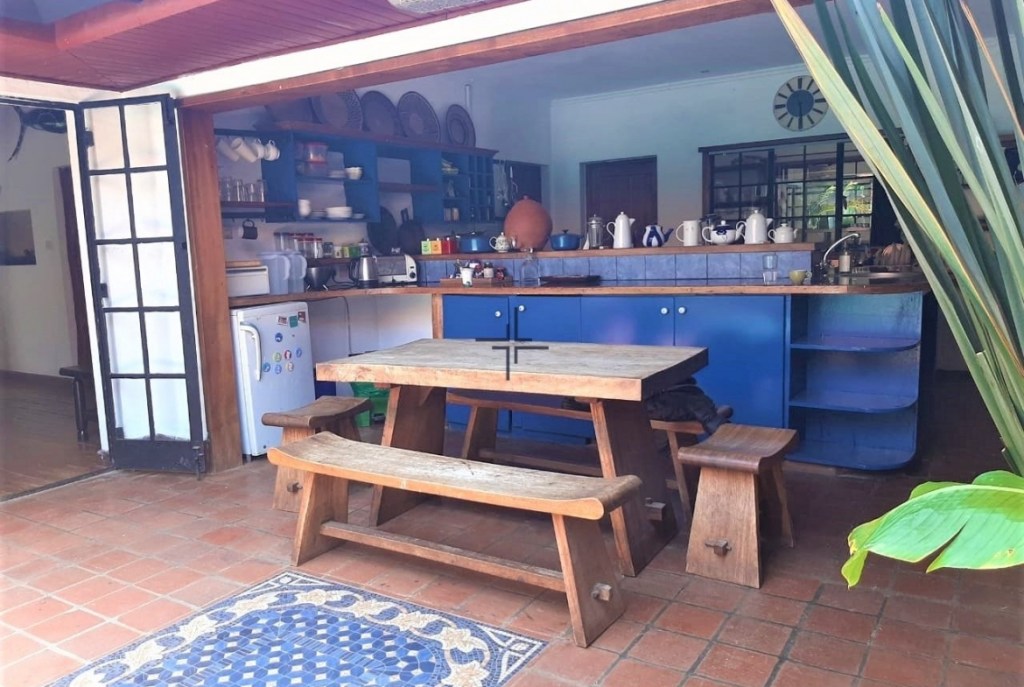
A lot of my net worth is property equity which is not really accessible but means I can dream about living in a fabulous house like this on in Nairobi…

Property

So 60% of my net worth is property equity. This is across two homes. I rented out my main residence in the UK when I got a job overseas and it is still tenanted. This means that the interest rate isn’t great (abot 4%) but I have focused on paying off this mortgage as a matter of priority. That’s based largely on my risk appetite (AKA terror of losing my job and making my kids homeless) and whilst I realise it might not be the most rationale approach to wealth building, it gives me a sense of comfort. I had a huge deposit from the sale of my previous home, so the mortgage was only £156,000 to start with and I have paid off £111,000 in the past six years.

This property is also my only passive income stream, bringing in £1,250 gross, or about £900 net of all costs since I have a letting agent manage it and of course have to ensure that everything is in good working order.

My second property is the home that we live in in Denmark. I wrote a lot about the decision to buy, and then about freaking out about the cost of property here but on balance I still think it was the right decision. Aside from the ridiculous cost of rent, the housing market is crazy at the moment and I have friends who cannot find places to rent. So again – it’s not just a financial decision but one about stability.

I don’t try and overpay the mortgage on this house. Partly because it’s so huge I just won’t make a dent, but also because we will sell this when we move country again. So since housing is a significant monthly cost, I just pay it and hope that I get a return on investment that is better than paying rent to someone else.

I am interested in having more of a property porfolio but it’s so hard in the UK. I listen to a lot of great FIRE podcasts from the US and everything – from the financing, to the market – just seems miles away. There are also ethical issues, in both directions, about being a private landlord but that’s a post for another day.

Savings

The result of buying a second home though was that my savings and investments took a massive hit. I went from almost £100,000 in savings to around £20,000 which I have built back up. That amount includes my emergency fund of £10,000 and the rest is in a stocks and shares ISA.

This is the area that I really want to focus on as there is so much room for growth. I also feel very property heavy in terms of the portfolio overall, and it’s money that just stays tied up.

Whether you’re saving for a rainy day or a cloud forest holiday, this is the most flexible part of your portfolio. Photo by Vlad Bagacian on Unsplash

Pensions

So this is the confusing area I think. Most of the FIRE community talks about total pension pots, and for me that is around

But the majority of my pensions are defined benefit which works totally differently. Have a look here for a simple explanation but basically, defined benefit means that the pot doesn’t really matter: what I will receive as a pension is guaranteed. This is a great place to be in lots of ways, though it is limited in terms of flexibility. I can’t, for example, decide where those pensions are invested. But in terms of security and planning they really work.

So what is interesting is not so much the overall pot as how much each one will pay out in retirement. The figures below show both the current pot value calculated as the transfer value (what I would get if I cashed out or wanted to move it) and also what it’s scheduled to pay out. All of the defined benefit schemes pay out when I am 67, so I also need to focus on what could be quite a long period to bridge if I want to retire at 50.

One thing to note is that the third pension pot will pay that out if I carry on contributing at this level for another two years – if I leave the job before then, they just pay me out the transfer value. So I need to stay here at least a bit longer!

PensionsTransfer valuePension on retirement
TOTALS £ 234,973£23,316
 SIPP £ 42,983£400
 Defined benefit pension 1 £ 39,462£1,400
 Defined benefit pension 2 £ 62,304£6,250
 Defined benefit pension 3 £ 90,224£15,266

You can see from this that they aren’t all equal. Each one has a totally different rate of return.

It does make me question the value of investing in the SIPP, as works out as a 1% rate of withdrawal which doesn’t seem that smart. Once I lock in my defined benefit pensions, I might stop this one and focus on saving and investing in other ways.

So that’s it. There are other very small pots in there like crypto but these are the real pillars of my financial plan. I do need to think about rebalancing them but for now I will end on a picture of the kitchen from that same house – because dreaming big is what it’s all about.

Kitchen goals

What do you actually need to retire on?

Last week I wrote about how my net worth is now $950,000, and how I was feeling about it. Do come and join me on Insta where I tell the same stories but with a lot fewer words, and with photos of Barbies. What’s not to like?!

This week I want to talk through what the limitations of my net worth are. Not because I’m ungrateful or want to scare off people who are much earlier on in the journey, but because there are impacts to how we organise a portfolio which means that net worth doesn’t necessarily tell the whole story in terms of what I need to retire on.

So let’s go back to basics. The FIRE approach to early retirement takes as standard the 4% rule: basically, you need to save 25 times your annual financial requirements, then you will be able to withdraw 4% each year in a way which will keep you going for at least 30 years.

Yes ma’am! Photo by Precondo CA on Unsplash

There has been a huge amount of discussion on this in the FIRE community and outside. The 4% rule comes from the fairly standardised view of return on investment in the stock market. The S&P500 for example has an annualised return rate of 7.5% over the past decades. So if you assume inflation gobbles up 3%, you’re left with 4% that you can withdraw before impacting on the capital.

Right now, there are commentators noting that the 4% rule might not work as well in future, as the stock market goes into a period of instability (or, you know, total global apocalyptic meltdown). Others point out that, on balance, the markets always right themselves eventually. At the point of drawdown though the issue is this – if you are retired and you need to spend out of your portfolio, you can’t wait for the market to resettle, and you can’t withdraw based on an average. So if you need to take money at a challenging time when the markets are down, you will either only be able to take out less, or it will diminish your capital.

As an aside, if you are new to this journey you really don’t need to know everything about the stock market but you might want to explore a little – I love Paula Pant’s recent basics guide.

Enjoy yourself! Either by talking about the stock market, or by planning your fantasy life when you retire. I know which I prefer… Photo by Jay-Pee Peña 🇵🇭 on Unsplash

(Side bar – I do my financial planning in GBP£ but calculate my net worth in US$ because it looks better. I know, I know, the games we play with ourselves…)

The reason this matters is because it has a significant impact on how much you need to save in the first place. I worked on the basis that I need £30,000 per year to live on – there are a lot of assumptions and years of budgeting behind this, but broadly, it works. Which? have a fascinating annual survey of how much retirees spend annually, and they calculate that £31,000 per year is enough for a single person to have a ‘luxury retirement’. But this assume the person is older, without the need to financially support children or their own elderly parents. It also says that spending on food and drink dramatically decrease and let’s face it – that’s not going to be me.

To withdraw 4% and have this be £30,000 per year in retirement, I would need to save 25 times that amount. So 25 x 30,000 = £750,000 ($975,000), which is very close to where I am. Using a more conservative approach would suggest using the 3% rule instead, or saving 33 x 30,000 = £990,000 ($1.23m).

There are lots of caveats to this in terms of how you do your planning and what it means, but it is also a stark reminder of where the mindful money aspect comes in to play. It sounds obvious, but the more you want to spend in the future, the more you have to save now. This also means looking at paying down debt, or paying off your home: basically balancing your expenditure with your planning.

Gather up your courage and do your calculations. Big Shaq is with you!

That means that the first and most important step is to know your numbers. Next week I will walk through my portfolio and some of the challenges in calculating an early retirement age, especially around accounting for defined benefit pensions, and deciding how to treat buying a house vs renting, as well as understanding what each of these options means in your planning.

Until then, I hope you enjoy working through some of your numbers. I’d love to hear from you, here or on Insta, about how it’s going and whether there are any more hacks and ideas I can help with.

How reaching $1 million net worth (almost) feels

Don’t forget to join me on Insta! Loving the conversation and energy over there.

So I have missed writing this blog for two weeks. This seems like pretty poor form, especially so early in the year, but honestly it was an act of radical self-care. I was in Kenya for work and took some time to connect with friends and loved ones, and really think about where I’m going. It also made me look back on where I have come from, so this post explores some of the feels I’m experiencing about getting so close to another net worth goal and what it all means. TL:DR – it’s not what I expected.

Lots of people are finding things hard at the moment. The world is (I was going to say ‘feels’ but let’s cut to the chase) unstable and scary; we’ve spent two years away from normal connections; the cost of the day to day is soaring – basically, it can feel like we’re all screwed.

View from my window this morning. No matter how bad, the sun still rises.

I’ve written a lot about gratitude but usually as more of a warm fuzzy rather than an actual practice. But gratitude is the antidote to stuckness, anxiety and fear, so when it feels like the world is screwed it’s the obvious place to go. Then someone on my Facebook asked – is there even any point starting a FIRE journey after 40? After taking a minute to feel sad about all the limiting beliefs society and ourselves live to, I had to answer HELL YES. And it also made me take time to be grateful for how far I have come, and how I now get to encourage others.

There is always a point to taking control of the things in our lives within our grasp. Being mindful with money – or work or whatever – instantly converts those thoughts and activities to a meaningful engagement with the world. It sounds obvious but getting intentional about your decisions and actions really does make a difference. It is so easy to float about thinking you will get around to something, whilst all the time you are building up a life you don’t want. So – being intentional will positively impact your life, regardless of whether it equates to your FIRE goals.

In preparing to reply to her, I checked my numbers – and realised I am at $950,000 – so almost $1 million net worth.

mmmmmhhhhmmmm

I mean, I pay close enough attention to know I was heading there but changes in the housing market in particular have really made a difference.

Ironically, my first thought was – I thought it would feel better than this.

Hear me out. I worked my backside off to get here, and I really am grateful. But perhaps there is something about having an iconic goal, and one which is actually a proxy indicator rather than the goal itself, which doesn’t feel that special? It might also be hedonic adaptation – if I went from zero to this, perhaps the feels would be different? Or perhaps I’m just an asshole.

I will run through my numbers properly next week but I also note that this net worth is not enough to retire early on: or at least it isn’t in the portfolio I have which is very largely pensions and real estate. What it does give me though, is a sense of achievement and possibility. What I need to guard against now is the hedonic treadmill and striving for more and more. And also against being ungrateful to the point that I don’t even smell the roses.

And I need to get back to what really matters. My two weeks away highlighted to me that I am less prepared to keep waiting and making compromises than I have been to date. Hoping to pile up some more money when it isn’t even making me happy – and I have enough to be financially secure to the point where I can think about taking risks – is starting to feel like the wrong bargain. But that feels like a success. I started this journey wanting to make FU money. Maybe I’m just a lot closer to saying FU.

Beach money: investing and risk

I’m taking a break from the New Year Money guides to riff a little. This week has been filled with stories of stock market crashes, crypto circling the drain, and general doom. Quick reminder that when weeks like this seem long, do join me for mindful money hacks and positivity over on Instagram @brilliant_ladies_money. Now with added Barbies and reggae!

So I wanted to chat a bit about risk, opportunity and how growing into your power means making decisions you really believe in: feeling your way through the different options and trusting that you have your foundations on point, whilst still showing up with courage.

Either way, let’s make it to the beach. Photo by frank mckenna on Unsplash

If you spend enough time on social media it is easy to believe that we are all missing out on the ability to make easy millions through crypto, NFTs (IKR?), or indeed being eight years old and making videos of oursleves opening gifts. I don’t believe it’s all snake oil though. My parents, like many working class people, refused to have anything to do with investing or the stock market because of deep suspicion, and it harmed their finances in the end. On my mum’s side I think it was partly her left wing politics but for both of them it was definitely lack of trust that the system could benefit them in any way, as well as lack of confidence. I think I’m the only person in my family to have investments, and it still causes my mum to freak out.

I thought a lot of this was historical, but a study by Forbes shows that 65% of people aged 18-40 say that investing in the stock market is scary or intimidating. But this is the interesting thing about perceived risks: that age group is also the most likely to be familiar with cryptocurrencies; have holdings or expect to buy crypto in the future. There are a lot of brave investors out there as well who see engagement with Wall Street as part of the great Battle Between Good and Evil. Whilst it’s not totally clear who is on which side, the pandemic, climate change and heated global politics means it’s not hard to get the sense that the End of Days are on the way. This week was the anniversary of GameStop – the memestock phenomenon that saw average small investors drive up the price of GameStop shares by 1,700% through enouragement on reddit. If you are interested in hearing more about that, and about understanding the ethics of engaging with the stock market and how to impact it, I really recommend Paula Pant’s podcast on the topic.

Whatever you do, make sure you understand the risks. Photo by janilson furtado on Unsplash

After a few years of investing – and freaking out, and sometimes doing stupid things – here’s what I learnt:

Your portfolio should have different options depending on your risk tolerance based on what you want that money for and the consequences of losing it. There is room for both the tortoise and the hare here: room indeed even for the Pink Fairy Armadillo. The question is choosing the right vehicle for your money at any particular point. If you are socking money away for retirement you already know:

  • What your time horizon is, and probably that you have a long period to invest meaning that you can choose vehicles which take a longer time to generate a return, as well as needing to factor in inflation. The long horizon also makes it wise to look at tax implications since you will, hopefully, be making a bunch of money over a long period.
  • That you need to be sure there will be money by the time you retire, so your risk tolerance will likely change as you get closer to the date and you will have a chance to rebalance so it makes sense to find a mechanism which allows that.
  • The consequences of not investing wisely would have a massive impact on the later seasons of your life. If you lose your retirement fund, it increases the likelihood that you will have to work way, way past when you want to and are more at the mercy of health issues, not able to help out adult children and so on. Basically, it’s not where we want to end up, and for my generation who worked 15-20 years before pension auto-enrollment but will probably get to retirement after the State Pension has gone up in smoke, it is a very real destination.

Balancing the options therein should get the balance between comfort and discomfort.

  • Get the very basics right first. If you have a clear saving and investing strategy for the money you have coming in based on hierarchy you will create a foundational level of comfort which frees you to be courageous elsewhere. Allocate the money that needs to be there to pay your bills, keep your kids fed and a roof over your heads, and it removes a whole load of late-night anxiety. This money is not something you need to invest anywhere, at any time. Keep it accessible, and spend it – it’s what you made it for. Check out my post on working out your fixed outgoings, and go from there.
  • Prepare for emergencies. I am a total catastrophiser. I think working in the humanitarian sector for so long, coupled with a few unexpected life disasters and an overactive imagination means that the only answer I ever have to the question ‘what could possibly go wrong’ is ‘EVERY DAMN THING’! Whether you think they are coming or not, having rainy day money, or an emergency fund, means that you won’t be thrown off course by a broken down car, month without work, or whatever else. Keep it accessible but don’t spend it unless you have to – it’s there to protect you later on. As I say to my kids, boredom is not an emergency.
Beauty has foundations and grandeur. Work out what needs to be where to hit the right balance. Photo by Johannes Ludwig on Unsplash

After that, base decisions on what you are prepared to lose.

  • Optimism bias means that we are programmed to think about what we have to gain. Negative Nelly over here says – but what about what you might lose? There is a reason though why this is the right question to ask when thinking about investing. With the examples above of retirement, monthly costs and emergency funds, the answers are quite different. The risk balance for retirement is also cushioned by the longer time horizon, and by the fact that (hopefully) you can delay using that money by a few months or years if you need to ride out an occurance in the market.
  • Conversely working this out gives you a whole load of freedom for other pots of money. I have a few super high risk investments which have all been done with what I call beach money. This is money where if I lose it all it means I can’t take my kids to the beach for a holiday – not that we can’t pay our rent. It means I can be brave (or ill informed, let’s be fair) and it really doesn’t matter. I have about $10,000 of beach money investments across angel investments and crypto, and I only really think about it when I am getting antsy that I might be missing out on something.

Working out your priorities means you will create a framework in which you can have certainty and risk where you need to. Let me know how you balance this out, I love hearing from you!

New Year 2: Auditing your fixed costs

First of all, in line with ‘new year, new challenges’ I am thrilled to let you know that I have set up an Instagram account, @brilliant_ladies_money linked to this blog. Do join me for daily tips, hacks and inspiration on mindful living and growing into your financial power – plus I’d love to see what you are working on!

Last week I wrote about giving yourself a break: this week, it’s more about knuckling down and finding ways to do some of the foundational tasks on which you can build out your financial independence journey.

Whilst most people think about going straight to budgeting, my feeling is that can seem like a huge mountain of joylessness. and sometimes that is offset by knowing how great you will feel afterwards but – a mountain is a mountain, you know? So I recommend splitting this out and focusing first of all on an audit of your fixed costs.

Maybe boring but necessary – find that paperwork! Photo by Kelly Sikkema on Unsplash

Undertaking an audit of your finances literally just means going through the details of your spending and working out what your outgoings are, and how often they are paid. I am not talking about discretionary spending at this point – that will be what you have left over once you have done steps one and two. And you don’t need to include things which go out of your pre-tax salary like pension contributions or healthcare since all we are doing is balancing your take-homie budget. There are tons of different ways to do these things, and they key is trying something and sticking to it long enough to see if it works for you.

So, what are all the things that you have to pay regularly, whether monthly or annually? We’ll talk about ways to plan for the non-monthly outoings but for now, just make sure they are in here.

  1. Think about your fixed costs and what they might be – housing, transport and childcare are usually the three biggest. Think about your utilities, council taxes, car service or tax, income tax if you are self-employed or have side hustles and so on. It would also include debt repayments if you have them. How to fast track debt repayments is a different discussion: for now just list them out.  The list doesn’t include regular payments which you could choose to live without, like media subscriptions: only the essentials.
  2. Go through your direct debits and standing orders first, listing out the detailed amount, what it’s for, and when it goes out of your account into a spreadsheet or notebooks. You can write this down however you like but it’s easier to use a spreadsheet because then you can change figures and it makes it easier to track your overall spending over time.
  3. Go through your bank statements and identify other areas where you might have other regular costs. I pay our public transport passes via a recurring card payment so they only show up on my statements. Add these into the spreadsheet. You might need to scour a full year of statements, but if you have in mind when your fixed costs come out you can be a bit more focused.
It can even be beautiful before you start the climb, but the view is much better from the top. Photo by Kyle Johnson on Unsplash

This is what my real numbers look like. And I know the actual amounts are OUTRAGEOUS but I live in Denmark – which also explains the salary – so it’s also pretty standard. I will chat another time on the sky-rocketing utility bills happening all over Europe (when I can find the time in between putting extra jumpers on), but for now, this is what I expect to have as monthly fixed outgoings in 2022:

Personal insurance £               11.48
Home insurance £               38.33
Car insurance £               54.91
Buildings insurance £               88.29
Insurance Totals £         193.01
Electricity £             147.62
Internet £               35.70
Water  £             209.72
Gas & hot water £             494.13
Security (offset by cheaper insurance) £               32.94
Council tax £             302.59
Utilities Totals £      1,222.70
DK Loan £             788.22
Mortgage £         1,045.30
Deposit Loan (more on this later…) £             498.00
House Repayment £      2,331.52
Train passes £             100.00
Car service and tax £               25.00
Transport Totals £         125.00
 Childcare Totals£      1,089.45 
 MONTHLY FIXED TOTALS£      4,961.68 

Remember that this is your life, and your money. Some people see childcare as negotiable and might look at this and see how to rebalance their priorities with their spouse. That is not my life, so this stays as a fixed cost. Ditto transport – whilst people can change how they approach transport, I don’t plan to do so this year so it’s going to stay fixed.

And that’s it! Everything else you spend is discretionary. And yes there are other things you need to stay alive like food, but we’ll deal with the monster topic that is grocery shopping in part three.

Once you know what your fixed costs, are, take your income, and minus these costs. Then you have the money you have left over to save and to spend. For me that’s £7,500 as monthly take home meaning I have £2,538 left. That means my fixed costs are already 65% of my monthly income.

Next week we’re going to work on what this means for saving, spending, and making it all come together for the changes you want to see in your life.

It will make everything so much simpler for the next step. Photo by Pablo Arroyo on Unsplash

Let me know if you undertake this process and how it works for you. And here’s looking forward to a fabulous 2022!

New Year 1: Getting started with money

So here we are again, another year! Having started off with a cheerful little post on loneliness, I wanted to come back to thinking as the FIRE community, where you are definitely not alone. Whether you are new to thinking about personal finance or fully on your path, the new year offers a moment to take stock and think about where you want to be, and how you will get there.

Woop! Photo by zero take on Unsplash

Now, I don’t really make New Year’s resolutions. As my dear friend said – why add pressure? Why not just resolve to be kind to yourself, and treat yourself well? I think that is sage advice, but I do like to find tangible ways to treat myself well (and also to myself, said with love – this does not involve a cold beer and some cheese straws).  I’ve written before about how managing your finances is an act of radical self care and it’s certainly true for me.

I know lots of people find thinking about finance stressful: try imagining instead that dealing with your money is a way of reducing stress now and in the future. You might have to sit and do some tedious legwork now, but what if it meant no more sleepless nights worrying about money? What if it freed up some brain space for you to dream and act on those plans? Now that’s worth a resolution.

So my advice to you, especially if you are just getting started, is to give yourself a break. We’ve all had a hard few years, and a lot of the financial (and other) news coming out suggests that 2022 isn’t going to be a bunch of roses either. The most important thing though is to give yourself some grace and some space, not just because you deserve it but because when you are ready to work on your finances (or your weight, your love life or your novel) you will come from a place where you are more centred and compassionate, and more able to engage.

New year, same old you, but maybe with some new ideas. Photo by Sincerely Media on Unsplash

I also believe there are a lot of easier ways to cut through the white noise of financial confusion. My next few posts will cover some options as to how to knock your finances into shape for 2022, when you are ready.

There is a ton of financial guidance out at this time of year. January feels like a fresh start, plus it’s common to come out of the holiday period feeling a bit queasy about overspending, or about carrying debt into yet another year. Sometimes the advice can be helpful, but I find many of them either over simplify – “set a budget and stick to it” is a frequent gem which makes me think “oh thanks! :facepalm:” – or cram so many different things in that it can feel overwhelming.

So my new year financial resolutions are limited to the following:

  • Audit: Work out what my fixed costs are;
  • Pay myself first: Work out what I can reasonably save and ensure that it is automated to come out straight after I get paid;
  • Burn the budget: Basically, I’m not going to sweat what happens with the rest of my money. I mean, within reason.

And that’s it. Simples! Looking forward to sharing my audit process, and my own results, next week. Until then, put your feet up and finish off the Christmas chocolates. You got this.

Grace and space first: everything else will come. Photo by Nitish Meena on Unsplash

New Year reflections: Loneliness

I wanted to start off this year recognising that there seems to be an epidemic of loneliness. This has real implications for us as a society, and I believe means specific things for those of us who were already on solo journeys before all the craziness of COVID cut off our social networks.

Almost half of all people in the UK report feeling lonely sometimes, and 18% of Americans note that they have only one person – or nobody – that they can rely on. Young people and those over 65 are particularly at risk of feeling lonely, and this has increased with the lockdown restrictions.

And loneliness really matters, not just for mental wellbeing but also for our physical health. Feeling isolated is linked to early mortality, poor cardivascular health, depression and suicide. In fact it is so serious that the negative health impact of loneliness is akin to smoking 15 cigarettes a day. Sometimes when I feel lonely I also feel a bit ashamed about it, like I’m the unpopular kid at school standing in a corner whilst the fun and noise goes on around me. But reminders about the impact of feeling like this means it’s important to sometimes look it in the eye.

Wandering lonely as a cloud. Photo by Ihor Malytskyi on Unsplash

In my own social circles I see real evidence of people struggling to feel connected and secure, and it’s something that I have noticed in myself as well.

Being a single parent is a pretty lonely place. Being responsible for all the decisions and actions, being good and bad cop, and being where the buck stops on All. The. Things. can get exhausting. Add into the mix the other things that I’m trying to do, whether in terms of work, family, friendship or interests, and the spinning plates sometimes drop. Then add in trying to follow the road less travelled into FIRE, female senior leadership and mindful living and sometimes I feel like a leaf being blown about in a gale.

I also recognise that not all cultures operate in the same way, so the kinds of family or community that might lean in to support me don’t really exist in Europe. The rise of one-person households; the culture of ‘busyness’; urban planning and how we interact with our neighbours; work culture: all of these things create friction in human interactions which in turn increases the sense of isolation.

Sometimes you’re a leaf in a gale, sometimes you’re pure gold. Photo by GraceHues Photography on Unsplash

In spite of this, recognising that loneliness comes with going down the road less travelled, loosens its negative grip on me. So ok, single parenting is lonley precisely because we are doing it alone. And having a vision outside of the norm – following FIRE, being an entrepreneur or a leader – necessarily means carving your own path. Sometimes that path feels lonely and sometimes it feels liberating.

Amen! Photo by Ian Taylor on Unsplash

So what are the opportunities to mitigate loneliness whilst still creating your own life? The first strategy has to be around building a stronger community. Maybe it’s taking time to speak with your friends – and really speak with them, not just having a laugh down the pub (though that has its mental health benefits too…). Maybe it’s engaging family, or working on some of the more challenging relationships which support your healing. Maybe it’s joining up with, or building a new community, whether in your neighbourhood or online.

My second strategy is around focusing on the calendar. Whilst Judaism has traditions which mark the weeks and phases of the year, the main thing for me is to recognise the seasons and celebrate or act in accordance. This is even more important to me since living in Denmark where the winter can feel depressing and lonely, and taking it gently matters more. Having rituals or activities which mark the passing of the seasons – from new year’s resolutions, to the new school year – makes me feel more like an active participant in something positive.

Finally perhaps it’s about learning to listen, and to be heard. Being prepared to open up, to share what isn’t working and ask when you need something, matters. Listening and being open to hearing difficult things from others, also matters. Building meaningful connections can take time and can be challenging – especially if you are feeling low – but it’s really worth it.

So – what are your ideas for combatting loneliness? Wishing you a happy and nourishing 2022!

Creating the future: part II

In my last post I was talking about getting inspired to work on future planning. I always end up focusing at strange points when I get in to visioning and planning: either very granular and what-do-I-need-to-do-today or totally random fantasy visioning. I wanted to spend some focused time thinking about all the different aspects of my life and where I want to be in five years, to give me something to work backwards from.

I will be 47 in five years time. That feels horribly close to – well, just close to being dead. I don’t know why 47 sounds so freaking old compared to 45 and whilst I did think about doing a three year plan just so I could feel better about it, it was a good moment to face my fears and remember that aging is such a privilege. My kids will be 17 and 13: and parenting teenagers, preparing them for this world of ours, is a whole other thing. But it’s also a phase I want to be present for to support them – and enjoy their company – as they get ready to fly.

Yeah baby. Photo by Randy Tarampi on Unsplash

So I wanted to start with the vision. I organised my thinking into nine key areas: health, career, money, family, relationships, social, spiritual, home and service. I then spent my journalling time this week just thinking about these nine areas, and letting my imagination take me wherever. I found this quite challenging as I think I have a very clear vision, but I have clarity on a few random bits and lots of missing pieces.

For about 10 years I’ve had the same vision. It is literally a snapshot image of my future – I don’t know where it came from but it simply and neatly encapsulates all of the aspects. I am in my house in Nairobi, walking to the front door to welcome some friends coming for dinner. I’m so comfortable in my body – wearing a fairly simple grey dress but it really shows off my figure; my heels are comfortable (this is how we know it’s a fantasy) and my hair is up. I’m walking through to the hallway and noticing how much my home feels like me: the beautiful fabrics, the light, happy family photos and collected paintings on the wall. I’m looking forward to an evening with great company, there’s delicious food to enjoy together with my friend and my kids. There’s a palpable sense of peace. As I get to the hallway, my partner stops me briefly, kisses my neck and smiles.

And that’s it. But I find that vision of my future so completely compelling that I feel like I’ve been making moves towards it for more than a decade. Sometimes it feels too little to hope for, and sometimes it feels too much. But either way, it is more likely to come true if I have a more focused approach to getting there.

This is Arijiju aka the most fabulous place in Kenya, but since this is my fantasy let’s pretend this is my house

So – more specifically, where do I want to be? I worked through the nine areas and really thought about where I want to be in five years. And I came up with the following. Again – I don’t know if it’s to want too little or too much, but for now, this feels like me. The only hard one was relationships because there’s something about expressing a desire to have a partner which makes me really squeamish. Partly there’s something needy about it – we aren’t supposed to want these things, just to hang around looking pretty and disinterested until someone chooses us and we swoon. But also partly because I am really happy single, and wanting something else feels like a diminishment of this. Enough caveats though: let me just say it’s something I would like, and I am not embarrassed about that. Shame is for amateurs.

The five year goal setting

Health
Healthy and well, taking care of myself
Happy and comfortable in my body
Fit and confident in my movements and physique
Well dressed and put together but confident enough to not have to do this all the time
Starting midlife proud of how I look and feel, in a good mental health space
Money
Taking home $15,000 per month based on either employment, passive income, business or consultancies
UK mortgage paid off and generating passive income
Guaranteed £40,000 per annum pension income on retirement even if I don’t contribute more
Able to cashflow all needs or receive benefits to same amount
Career
Doing work which builds on my existing skills, gives me fresh challenges, and creates positive impact
If in an organization, senior enough to make a difference to the culture
If in business/self-employed, passionate and capable enough to be building toward scale and impact
Inspiring and motivating others in the sector
Environment/home
Be living in Kenya, preferably in a house I have bought somewhere near the city but that feels like the country
Be comfortable at home, have a calm environment where there are always people around the kitchen table
Spend time in nature
Relationships
Be with a partner with the same level of aspiration, ambition and care that I have for my life (including my sex life)
Feel secure and cherished, without fear
Family Connect fully with family including moving past previous issues where relevant
Be raising healthy, happy, conscious children who are a force for good in the world and growing towards independence but secure at home and in their sense of self
Social
Stay connected to my core friendship group, making an effort with those people who live far
Spend my social time mindfully in a way which nourishes me and lives my values
Spiritual/wellbeing
Living life from a place of gratitude including through prayer, meditation etc
Make spiritual connections / community, whatever that looks like
Service
Actively engage in service around community issues which are meaningful to me
Ensure strong family care
Care about and engage in politics, whilst not drowning in it
Where do I want to be in five years?

It was a really interesting exercise. I don’t think any of the aspects were surprising, but I liked how congruent they felt – and how much they gave me a sense of calm focus.

Next week I plan to work on money and career, and start mapping out a bit more in terms of shorter goals and steps. Aluta continua!

What will you do with your one wild and precious life? Photo by Greg Rakozy on Unsplash

Creating the future: part I

I love setting goals. There is a real sense of purpose that comes with thinking about goals, and a feeling that you are creating a meaningful future.

I also love goal setting because it’s free (woohoo) and feels great. Whilst it’s crucial to have a vision and targets, for myself I know I can use thinking about goals as a way of staring off into the middle-distance whilst feeling like I am achieving something.

The last few weeks for me have been around looking at my life with a real focus on creating a plan. Abe Lincoln said “The best way to predict the future is to create it” and right now I’m so inspired by the future I’m predicting that actually starting to go deep into the detail feels like a joy.

Planning for the future with this stunning view in Kampala. Lucky girl!

One aspect of this shift in focus has been consciously trying to engage more with postive energy. Mr Giver-Of-Stars and I had a few days in Kampala and the amount of positive motivation and the influence that has had on my current thinking is immense. It’s obvious, but if you’re feeling stuck then having a fresh persepctive – especially from someone you admire – can get you back on track.

The first thing has been going back to get clarity on my goals. And yes this involved a bit more middle-distance-staring, but if you’re overlooking Lake Victoria then that’s no bad thing. One difference this time was considering HARD goals (as opposed to SMART goals which might be useful but just make me think of poorly-run office retreats). HARD goals focus on more existentialist concerns, and invite you to consider four facets of your goals, the extent to which they are Heartfelt, Animated, Required, Difficult.

There is a lot of evidence that people are more motivated by goals which are difficult: that the challenge is the thing that pushes us to move ahead. Conversely, the challenges have to be achievable otherwise the mountain is too steep. For me, aiming to become an Olympic gymnast for example, is probably a few steps (or a few twirly-ribboned dance moves) too far. But pushing yourself is exhilarating, so set your boundaries as wide as possible and go for it.

Keep going: the sun will rise again

The last two years though have shown how much things can change. As such, the idea of setting goals which are heartfelt and make you feel animated. A deep connection to your goal means that you are more likely not just to reach it but to be able to nimbly react to changing circumstances and continue to work towards it. This malleability also means you can flex your approach as needed: whilst the plan absolutely matters, the attachment is to achieving the results.

So this week I am planning to take all that motivation and energy and head back over to my five-year plan. See you on the flip side!