Blimey, what a week. Not much to say other than O. M. G. It just keeps coming – too much work, issues going on with my parents’ health, ALL the world disasters. Things feel slippery and twisting and I can’t quite get a grip on any of them.
I’ve written before about overwhelm and whilst I still go there, mostly at the moment I’m just knackered. Trying to keep all the plates spinning seems increasingly unlikely. I am definitely making some crappy choices – staying up a bit too late, eating a bit too little, drinking a bit too much. None of this to the extent where it’s really damaging, but cumulatively it’s not really helping.
In her amazing book The Top Five Regrets of the Dying, Bonnie Ware, a palliative care nurse, reflects on the most common things that people realise toward the end of their lives. The one which struck me wasn’t ‘I wish I hadn’t worked so hard’ but ‘I wish I had let myself be happier‘. Ware says:
“This is a surprisingly common one. Many did not realise until the end that happiness is a choice. They had stayed stuck in old patterns and habits. The so-called ‘comfort’ of familiarity overflowed into their emotions, as well as their physical lives. Fear of change had them pretending to others, and to their selves, that they were content, when deep within, they longed to laugh properly and have silliness in their life again.”
This week I also read Alexandra Fuller’s ‘Leaving Before the Rains Come‘ about the lengthy unravelling of her twenty year marriage which had some similar reflections. The comfort in habits and ruts, however destructive they are, can feel like the only thing holding us together. There are lots of other truths here – what it means to collapse a life that you have actively participated in creating and the impact that has on others – and realising that change means loss.
Without meaning to sound like a crappy instagram meme: change is terrifying. But refusing to grow, and regretting what you might have missed out on, is much, much scarier.
That light wants to shine on ME? Hell no! Photo by Jared Rice on Unsplash
Sometimes I recognise that I am afraid to want things – afraid that wanting ‘too much’ or getting out of my lane will just end in ignominy and heartbreak. I get in the way of my own happiness. Which is ridiculous (and frustrating) but also feels like just an ass-hat way of being ungrateful. As well as all the slippery uncertainties in my life at the moment there are some amazing things: things I have prayed for and worked for and believed in. It’s taking daily work just to try and live in those moments, to not hold on too tightly and not so loosely that I drop them. Phew. No wonder I’m knackered.
So, on we go. Back out into the world and the new week with courage and gratitude. It will all work out.
Apologies for seeming self-obsessed these days, lurching from talking about radical self-care to self-identity. I could argue that it’s because western society is relentlessly individualistic, or that as a single parent there’s a whole lot of me-myself-and-I about my decision making. There are arguments within the FIRE community that pursuing this goal gives a whole load of freedom to redefine yourself: that we are more than our jobs, and can therefore move out of the social expectations which bind us to a particular path.
The question I have been asking myself this week, then, is who is the ‘you’ which is in charge of that decision making?
Partly this has come up because I realised that my decision making is not consisent but is always based (well, almost) on mindful decision making and therefore being satisfied with the verdict. It’s one of the reasons it’s useful to look back on budgets and approaches to spending with the mindset of who was I being at this moment – what was I prioritising? I can see days where I would buy take-out food, then months where I wouldn’t; months where my charitable giving changed; months where I just seem exhausted and anything went. I’ve been searching for ways to be consistent but I realised I was already being congruent. It’s just that my true north is more like a spin of the globe.
This week I read an article about how to reclaim your children which spoke to a common issue for parents as their kids get older and they start to feel disconnected. I think most parents – indeed most people – notice that sometimes time surges forward in huge chunks and either our kids or ourselves suddenly seem to be in a new and unexpected phase. But this piece articulated for me a more focused consideration about how to show up in each of those moments, and what the benefits or risks might be. The part that stuck with me said:
“This is what I wish I’d understood as a parent; consciously understood,” Maté, 75, says. “Take a 10-year-old child. How many years have you got left with them? When they are still under your roof, under your direction? Well, what is your goal for those years?” Looking back on his life “from above”, he says, he can see that his own goal “was to be a successful and busy and high-accomplishing physician. And that’s how I lived my life.”
This resonated with me so strongly. Finding ways to align my goals, or to navigate them in a way which leads to choices which work across the major priorities, is a constant battle. Add on to this public opinion (or just my mum’s opinion which can feel just as loud and is irritatingly better informed) and I’m sometimes amazed I don’t just lie in bed with the covers over my head.
This is where we are all heading, but you are so blessed to get there. Photo by Danie Franco on Unsplash
I have written before about recognising the short space of time we have as parents of young children – as well as the fact that those years, as full of love as they are, can feel absolutely interminable at the time. What the quote from Maté also reminded me is that during those years, the me who has been in charge has come from different places of identity. Some core basics have remained the same, though how I feel about them and the extent to which they drive my daily living changes: I am a daughter, a sister, friend, mother. I am also a single mother, a mother whose children have a father with a very different identity, a Jew from a complex and mixed family, a humanitarian, an activist, a senior woman working in a difficult and critical field. During the time my children have been in the picture I have also been a doctoral student (and then able to answer the infuriating question ‘is it Miss or Mrs’ with – ‘oh, it’s Dr’) – a woman struggling with depression, a writer, and an ambitious leader.
On some days though I look at my identity-list and think that actually I’m just an asshole. Those are the days where the other things recede into the middle distance and it takes effort to bring myself back.
These days I wonder what it would mean to add lover, girlfriend, partner to this list. Could all the other things survive? How, in a world of having to constantly reshuffle priorities and feeling like I am always at least 25% failing, could I head out on these new adventures whilst keeping the responsibilities, joy and care I get from the other aspects? And the reason this matters is not whether this particular fabulous but nascent thing works out but whether I can see another shift in my identity which doesn’t shift the foundation of integrity.
And when I look at my decision making whilst it’s good to be conscious of those issues, that’s not how I should – or do – make choices. I make them with heart, and hope that the congruence across my ‘whole being’ will point me in the right direction.
This week I was very much enjoying Tanja Hester from Our Next Life’s piece about whether it’s ‘Time to Retire FIRE’. Whilst she has been one of the founding parents of FIRE and feels much more of the social movement than someone like me who is on the periphery, she made a lot of interesting points.
Firstly, she examines how FIRE has been taken over by some loud voices who are really about making a lot of money as quickly as possible, and points to the proliferation of expensive courses, often run by people whose sole credential is that they say they don’t need to make money. Secondly, she gives a timely reminder about why so many of us got into FIRE in the first place: not to make as much money as possible, but as a way out of a capitalist system which isn’t working for most people.
For me, FIRE is both an act of radical suberversion and of radical self care.
I have a long term vision, but it’s the journey that matters...
I’m not an anarchist, and I’m not anti-wealth – one of my favourite people is a ‘wealth manager’ and I don’t like him any less for it. But I need to find a way not to just criticise a system which is devestating to so many, but also to live on the outskirts of it. For me this means: mindful spending and engagement with how I use my money; making that money as ethically as possible; opting out of capitalist competitive fuckry; and using my finances and my other resources to make the world better for other people. I am hardly living in a commune and weaving lentils, but there is an extent to which I am able to opt out, and ironically part of that opting out means having enough money to make different choices.
If you grew up broke like I did, then you know the impact of financial stresses. I’ve written before about the relationship between money and mental health but there is a bone-cracking exhaustion about constantly having to think about money, how the bills are going to get paid, and what’s in the fridge. I suspect that benefits levels in the UK are set at a level where people can just scrape by but to do so takes up so much energy that we don’t all rise up and burn. it. down.
I get fed up with the idea that self care, especially for women, is about going for a massage. Surely the idea is that you really, really take care of yourself? And this means creating a solid foundation on which to do all of the other things that are important to you. If you are financially secure – not rich, but secure and confident in your own knowledge – you are free to make choices. You can choose when and how to work; the kind of relationships you want to have, with who and when; how your children are brought up; and how you bring your light to the world.
What could be more radical than prioritising yourself and owning your decisions so that you can shape your own life and the world around you?
I don’t have any great insight into what’s happening to the FIRE movement, I think because I found the part of the community that really speaks to me, and it’s like having an extra group of mates who understand you and cheer you on. But if you’re new to these ideas, I strongly recommend thinking about what brought you here – and where you want to go.
Ah, here we are – that time of year again. I always have mixed feelings about birthdays – gratitude for the sheer privelige of each passing year, with the nostalgic sense of time moving ahead in a very finite way. And these days I get wrinkles, saggy bits, and bad hangovers. But as my mother would say, the alternative is death, so yom huledet sameach!
But this year, something feels different – like everything has changed. I feel centred for maybe the first ever time and it’s causing tiny miracles.
For me the idea of being centred is that my whole self is in alignment. It’s about thinking and acting from a place which is calibrated with who I am. It sounds really obvious, but the magic is the extent to which this reduces tension and stress, because I’m not constantly pushing against myself.
Let’s be clear, I can still absolutlely be a twat, get things wrong, get antsy. But for whatever reason, at the moment that no longer equates to spiralling down a sink hole of guilt or shame. It’s like my mental company has shifted so that my inner voice is full of friendly compassion and not the negative drama queens who played a loop of what I was doing wrong and why it made me unloveable. And when I fail I try ad own it and learn from it, then move on, rather than seeing it as another foundation stone in an exhausting life of failure.
I’m also not totally sure where this has all come from. I’ve written a lot about micro-habits and small steps, and living mindfully, so maybe it’s a combination of all those things. Recently I’ve also been asking myself some tough questions, and trying to act on the answers. Why are you going out for a drink with those people when you always come away from their company feeling bad? Why are you second-guessing something you really liked after someone else was negative? What audience are you playing to here – and what validation are you seeking?
A lot of these are also essential FIRE questions – what decisions are you making, and based on whose opinion? By doing that, what are you denying your essential self either now or in the future? Breaking habits can be really hard, both for you and those around you when you start changing. And it’s a life time practice rather than a destination so it’s not like everything is solved forever.
Right now when the world is burning, it feels like a miracle to have come home to myself. Happy birthday indeed!
Trigger warning – this post talks about mental health issues including suicide. If you are having a hard time, please reach out to the Samaritans or someone else you can talk to.
I’m glad to be back after the holidays. Other than the great few days spent isolating at my brother’s I ended up mostly working, it was so important to reconnet with friends and family (and fish ‘n’ chips), and just be somewhere else.
I’ve also been focusing on supporting my son who had his first anxiety attack, on his twelfth birthday.
He has always felt things very deeply, and has thought a lot about what is going on in the world. Currently, the world can feel like a pretty scary place, so it’s not at all surprising that the British Psychological Society found recently that one-third of 11-18 year olds are struggling to cope with their mental wellbeing at this time, and would benefit from support.
But he had an anxiety attack so strong and terrifyint that he was rushed to hospital for tests, and spent his birthday evening in a children’s ward. I was very glad for the support and calm care of the Danish health system, and for my boy’s tenacity and confidence in dealing with the episode. It was scary, but there was no shame around it.
My fear now, for both of us, is where this is coming from and what it means for his life. And that made me think about the relationships between fear and action. I should say upfront that I am not a doctor, psychologist or expert in anything other than my family and my opinions – which is what this blog is about. So if anything here triggers issues for you then please do get in touch with the professionals.
Money and mental health have been closely linked for a long time. UK charity MIND found that there is a cyclical relationship – having issues with money can negatively impact your mental health, making you feel anxious, unable to sleep at night or concentrate, and uncertain about the future. On the other hand having pre-existing mental health issues can make you struggle with money, whether through also finding it difficult to find or hold down a job, or to engage with things like communicating or negotiating with companies if you get into debt.
I don’t know what the answers are. From a FIRE perspective, the impact of the pandemic has made me beyond grateful that I have a steady job, no debt and an emergency fund. But with all the uncertainty it’s a terrifying time for people who are just getting started.
So the advice I leave you with is the same as the advice I am giving myself as a mum who is struggling, and that I have given to my son: be kind to yourself. Do the tiny steps which are open to you now, and don’t worry about those coming up in the future. You will deal with them when they come: you will have built the foundation you need through your small actions and you will be ready when they arrive. You don’t need to be ready now, you just need to be you. Breathe as deep as you can. Know that you are loved. You got this.
I wrote last week about buying a $1 milion home: over the last few days we got the keys and have been cleaning, painting and generally getting ready for the furniture move on Monday. Oh, and sort of freaking out about the whole thing but that’s pretty normal.
I want to say upfront that I never had a divorce settlement. I didn’t “get half the house” or much less “take him to the cleaners”. For all sorts of reasons that probably require some kind of therapy to understand, my marriage didn’t involve the mingling of finances, or equal financial engagement, at all. The good thing is that we took that attitude to the divorce meaning that I took out what I put in. Given that it was my money anyway, and I also did all the childcare, I can live with that. Note: many other ways of being married, or divorced, or thinking about money and marriage are available, and I wish you joy of them.
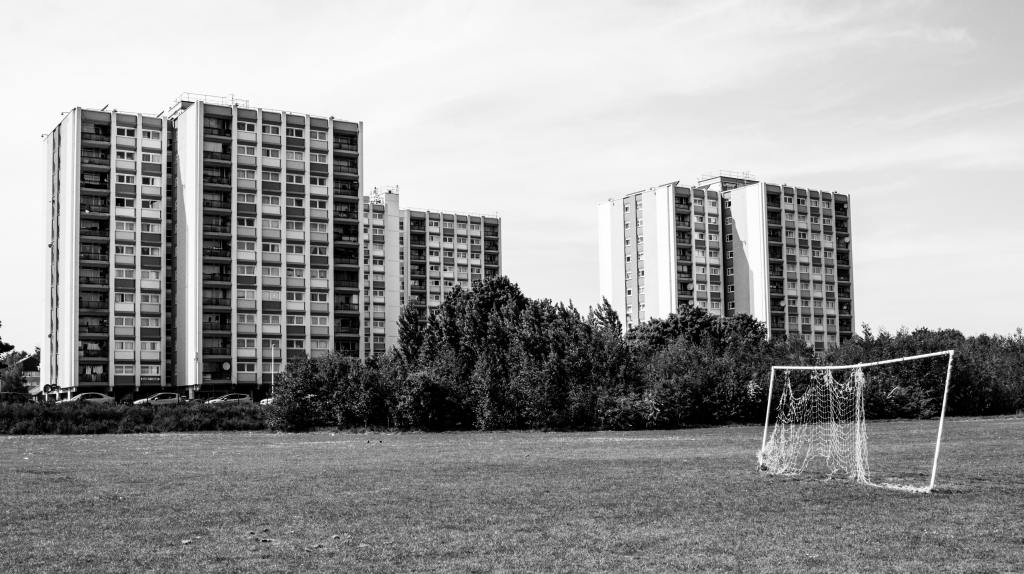
My first home purchase was in a tower block (not this one) Photo by Ben Allan on Unsplash
So how DID I get here?
A combination of luck, privilege and focus. It’s important to recognise that the focus itself might not have been enough – luck (mostly around timing) and privilege definitely helped. That’s not to say that this is not an option for others, but I see a lot of people talking about how they bought a house all by themselves whilst the back story shows how much they relied on their parents. So let’s be honest. I found it hard – other people will find it much much harder. But it’s not impossible.
House 1: bought for £55,000 sold for £110,000
My partner and I decided to try and buy twenty years ago, when I was 22. We had been living together for five years and rents in our home town were rising all the time. Even at that point the average property price for a two-bedroom home (a flat in the fancy part of town, a house in the non-fancy) was £170,000, and amount that would have required me to be earning £45,000. I was fortunate to get a great job out of university on £18,000, but that was still a world awya, and my partner’s self-employed income was limited as he established his business.
So we found the only thing we could afford, in a tower block on a housing estate, and bought it. We were always really frugal, and had been saving since we got together, saving £10,000. The flat was on the eighth floor though, meaning it wasn’t possible to get a mortgage. Here’s the privilege: my partner’s parents lent us the rest of the money. We set up a repayment plan in line with current mortgage rates, and continued to be frugal, doing a lot of work ourselves and taking in a lodger in the second bedroom though we didn’t pay off much extra on the loan.
When we split up four years later, we had the flat valued at £110,000. Based on splitting the equity 50:50, I got £30,000. I put this in a savings account and went off to pursue my humanitarian career overseas.
House 2: bought for£170,000, sold for £270,000
So by this point I am 30, and have a baby. I have a confused marriage where he is overseas (and not contributing anything financially or emotionally) and things are rocky. I am back in my hometown and the cost of living seems to be crazy. For the first time, I am fully responsible for another human being and realise I have no idea what I’m doing.
So I decide to buy a house and settle down. I still have an income that counts for a mortgage, even though it’s from a charity based overseas. And since I was living in South Sudan / Uganda / Rwanda for the past four years I have also added to my savings pot so with the equity from my first home I have a £70,000 deposit.
The glorious kitchen of my second home
The luck here is that it is 2009. House prices dropped by 16% in 2008 and I looked at a lot of repossessions which seemed heart-breaking. I wanted to stay on the same housing estate, but also realised pretty quickly that I couldn’t afford to live in another part of town. So I was looking at the lower end of the price range for a house. And my goodness I saw some unloved, filthy heaps.
Eventually I found a four bed house in a quiet cul-de-sac (important on a house estate with a reputation for joy riders) and put in an offer. Then I found that the flipside to 2008 was that banks were not keen to lend money to single people with precarious incomes. Around the same time my lovely granny passed away and left my family an inheritance (likely the only one we will ever get since we are not that kind of family).The bank will still not lend me the money. So again with the privilege – my mum and siblings club together their inheritances and lend me the other £100,000.
It’s hard to overestimate how much work needed doing: it had no heating at all, asbestos in the roof, single glazing, an extension which hadn’t been approved and had to be formalised by building standards, a kitchen where there were actual human turds in the cupboards. Safe to say I called in a lot of favours over the years, and did a lot on credit.
I had another two years overseas with my work, and rented the place out. Since I wasn’t entitled to a pension in that job (long story – I keep planning a series of posts entitled ‘mistakes I made with pensions, and why it’s a massive headache’ so do come back for more) I focused on the house as my main asset and worked on paying off my family. In 2014 I came back, thinking I would stay in the UK, and realised that now my son was older I didn’t want to stay on our housing estate. So I sold the house for £270,000, repayed my family loans, and had £140,000 to use as a deposit.
Phew. I think I would have made it without the family help as banks unclenched and my income settled, but it might have taken a lot longer. And living in a city where house prices have gone up 300% in 20 years, every year counts.
House 3: Bought for £352,000. Currently worth £400,000
This is my sensible house, and ironically we have only ever lived in it for six months. I bought really planning to stay in the UK, but then with work and other issues (not least pension obsession which kicked in at 35) I took another overseas job with the kids and we moved to west Africa. I rented the house out, and, given that accommodation was provided in my new job, I put a lot of extra money toward the mortgage. I took out a mortgage of £152,000 and currently owe just £50,000 – that means I have paid off £100,000 in five years. I aim to have it completely paid off by the time we leave Denmark.
So there we go. A rollercoaster ride which would not have been possible without the support of family, an early start, a high savings rate and a risk-taking approach. I wanted to just put some honesty out there about how this all happened for me – however hard I work and save (and I do work and save very hard) without that additional help, things would at the very least have taken a lot longer.
So – whats your housing story? And how can we think about collectively helping one another for those people in our situation who don’t have family support? I’d love to hear from you!
Hope is the thing with feathers, as Emily Dickinson said. After a few weeks of ‘coping’, this week I am back to full on hope.
Hope is the foundation of all my decision making – and the thing which keeps me tenacious and working in spite of appearances when it feels like things aren’t moving. Believing that you can change things, whether it’s your bank balance or how the world views you, means believing in the possibilities enough to carry on.
There have been so many things which make me feel blessed and hopeful recently. The summer weather and breeze, spending hours at the beach getting some energy back (and some vitamin D). The end of another school year and brilliant school reports for both my kids talking about how they are doing well but how they are kind and thoughtful: reminding me that however I feel I am doing as a parent, it’s good enough. Small things, but small things is what we have.
FIRE is all about hope to me. Hoping that I can give my kids a better future – including being there for them in person at different times in their lives, really loving them, and giving them the conditions to thrive. Hoping that I can live my values. Hoping that I can support my family by myself but doing so in a way which aligns to my values and my contribution to the world.
Showing up day after day, doing the work, making the tweaks. One thing I’ve learnt is the need to be patient with myself. Keeping the faith is half the battle – the other half is doing the next right thing, however tiny it feels.
What is making you hopeful this week? I’d love to hear from you!
A lot of FIRE approaches are about life changing decisions and sometimes they can just seem HUGE. Getting rid of debt, saving millions of pounds, and establishing major shifts in lifestyle can all seem like mountains which are just too big to climb.
This week I’ve been thinking about the small changes and how they really do add up to change, even though it can feel like daily habits which don’t add up to much. When I feel like that, I go back to the great book Atomic Habits which firstly sets out easier ways to get to something to be a habit, and not something you have to talk yourself into doing. It is also a great reminder that all the little steps do add up to the big achievements – and they really are the journey.
Here are ten tips of small things you can do, this week, to get that 1%.
Better days without the headaches. Photo by Hoang Le on Unsplash
Make one health change
I have struggled with my weight since I was a teenager, and it’s something I find both time-consuming and crushingly boring to think about all the time. The 1% approach has been really helpful for me in finding little things I can do rather than ‘going on a diet’. To be totally honest, COVID has shafted my diet in a lot of ways (the kitchen is just so CLOSE BY that I can’t ignore it) so I am back on calorie counting, but it’s temporary to get back in the zone. This week I only lost 1lb which feels like small recompense for all the meal-organising and biscuit-refusing that went on, but of course the only way to lose weight is a little at a time.
But the following are permanent changes which make a difference:
Make four touch points to drink large glasses of water: first thing in the morning as I am turning the coffee on: once in the afternoon when I sit back down to work after lunch (or after lunchtime meetings): once when I get home: and just after I put the kids to bed. These are all ‘moments’ which happen every day, and it means that I manage to drink about 3 liters of water, which is the recommended amount for women. I end up drinking more either during the day or in herbal tea or whatever, but it means I get hydrated without thinking about it.
Don’t eat after dinner. Ok, since it’s just me and the kids we eat quite early and we’re normally done by 18.30 – I know for lots of people with longer commutes, or different shifts this might not work. But I eat dinner and then nothing else. When I take the kids up to bed, I brush my teeth as well which also puts me off eating more. This single change has made a huge difference, as all the late night picking, chocolate in front of the telly or just miscellaneous grazing is then off the menu (see what I did there?!). It also means that I accidentally do 12:12 intermittent fasting since I don’t eat between 1900 and 0700, a full twelve hours. By itself it’s not enough to lose weight – the same link suggests that 12 hour fasting is the minimum we should do to give our bodies a break from digestion and boost metabolism – but it short-circuited the late evening mindless eating for me.
Have vegetables with every meal. Maybe you good people do this anyway, but if I was left to my own devices I would live off coffee and Cheetos. I got in the habit of having salad with lunch and dinner, making a pot of coleslaw (no dressing but prepared salad basically) twice a week and just having a serving with each meal. Apparently it’s even better to have a salad before you eat, since you are less likely to leave it on your plate, and the fibre will make you feel fuller and consequently eat less. Sometimes for us it’s a few spoons of green beans out of the freezer. Either way, it has massively increased my vegetable intake.
Reduce your caffeine intake. Having already mentioned coffee twice I should say that last year I switched to only drinking half-caffeine coffee. I used to be able to neck as much coffee as I wanted at any time of day but as I get older (ahem) I have been noticing that it affects me more. Rather than change my habit, I changed my coffee. Easy!
There are some things I find harder. Exercise for me (again, maybe you wonderful healthy people don’t struggle with this) but I have never found anything that has turned into an easy habit. I wrote before about cycling home from work which I do at least twice a week, but I talk to myself about whether I am going to cycle or take the train every. single. time. Still I make myself do it and appreciate the benefits, but it’s through intention rather than a new habit. However, every week that I cycle I get 1% better and fitter, making me more and more likely to keep going. So find something you can stomach, and just do it once a week.
Climbing a mountain one step at a time (in Kenya of course). Photo by Sergey Pesterev on Unsplash
Make one financial change
I feel like a lot of this blog is about the small tweaks which help on the journey toward financial independence, but in terms of real 1% actions, things which have helped me are:
Automate something. There are a million tricks around automation in your finances, with the basic premise being that you are likely to get in your own way at some point. I set up a monthly direct debit to both my ISA (savings) and SIPP (pension) but then also automated the investing against a pre-determined portfolio. So now I don’t need to do anything and it still happens. The approach of ‘set it and forget it’ really does work since it basically takes me and all my worries and twitches out of the investing. And it meant that I continued to invest even when the market was tanking and I panicked: that continued investing meant that things evened out, in the end.
De-automate something. The flip side of taking yourself out of the equation is places where you really do need to get involved. One example is de-automating your insurances so that you get a chance to find the best deals every year. You need to keep an eye on this – though your insurance company is likely to send you a reminder anyway – so that you don’t find yourself without insurance. But you can save around £300 a year by negotiating your insurance, and even more than that if you go through a cashback site. Which take me neatly to:
Set up accounts on cashback sites. Spending money is still spending money, but the biggest returns I’ve had from cash back sites have been on things like insurance or home broadband which I was going to pay for anyway. These sites don’t exist in Denmark, and I always feel like I am missing something. In the UK I use TopCashBack but there is a great article on the different sites and things to think about when using this approach.
Find a way to save that don’t involve, without thinking about it. There are a bunch of ways to do this, a lot of them attached to your debit card. I have a Monzo card and I set up the ‘coin jar’ feature, which rounds up the payment to the nearest £1 and puts it into a savings account. I don’t notice it going out, and it nets about £25 a month in savings – currently, since I never think about it, I have £600 in savings this way, which I plan to use for spends when we go on holiday. It feels like free money, which is the best kind. But there are lots of other apps and approaches available for painless saving. I heard a lot about Plum, though I’ve never used it – but it links to your banks, works out how much you can save, and uses AI to set it up and encourage you to do more.
Sort out your paperwork. Ok, so not everyone has physical paperwork any more, but we all have documents and for most people, there is something they could do to make it better. This is a great area for 1% improvements because it’s so easy to start wherever you are. If you are early on in your journey you might need to just open the bills piling up on the table. Or you might usefully ring up to reduce your credit card limit; go through one month of bank statements and look for any direct debits you might not have remembered; or update your budget spreadsheets. My big job, which I am doing in little 1% chunks, is putting together a Legacy Folder for if the worst happens to me – but more on what that entails in a future post. For now, just pick a small job you’ve been putting off, and get to it.
So there’s ten things, either on health or finances. There are loads more ideas on just making life that little bit better – if you want more inspiration, try the new Podcast Just One Thing, which has 15 minute episodes about small changes which can make a big difference.
And let me know what changes you will make this month – I’d love to hear from you!
Last week I wrote an introduction to FIRE and working out your FIRE number. The approach and calculations in that post also apply to basic retirement planning, since the task was to fully understand what you will need when you stop working. If you want a more step by step guide to approaching your pensions (and you’re in the UK) then check out this Meaningful Money podcast which does exactly that.
If you want to retire at 65, or at 30, you need to know your requirements. Only around 40% of Americans have tried to calculate their retirement needs (can’t find the number for British people but I suspect it might be even less). If you don’t know what your goal is or why it matters, the chances of you making it are slim.
Find your goal and align your behaviours to reach it. Photo by Ahmed Zayan on Unsplash
So once you have worked out what you need per year to live on, then the fun starts.
Or maybe it doesn’t. If you do your calculation and feel like it’s a million miles (or million pounds) away, it can feel disheartening. If your net worth is zero, it can feel even more impossible. But there are two things to bear in mind:
That there are different kinds of FIRE to aim for, and not all of them mean waiting until you have it all in the bank before you are independent enough to make different choices;
And that the basic tenets of spending less and making more income are available to (almost) everyone.
I want to take a moment to recognise that I am coming to this from a place of privilege. Poverty is alive and growing in the UK at what should be inexcusable rates. According to the Child Poverty Action Groupmore than 4.2 million children – or 30% – are growing up in poverty. 44% of children in lone parent households are growing up in poverty. Children from black and minority ethnic groups are more likely to be affected: 46% are now in poverty, compared with 26% of children in white British families. More than 70% of children living in poverty live in a working household – so the simplistic notion that we can all just work our way to a new life isn’t true either.
I’m not saying this to use a personal finance blog to smack about some politics – I’m saying it because not recognizing the institutional and personal privilege I do have would be not just disingenuous but would be a contribution to the kind of poverty-shaming narrative that we cannot afford if we are to care for the whole of our society. I am a single parent, and I was raised by one: we lived on benefits for a while when I was a child, and I did again as an adult with my first child. I am very fortunate to be in this position now, and I pay specific attention in my life as to how to support and build up others in that position. Ok, with that said…
Being privileged and ambitious doesn’t mean losing your humanity: being more independent gives you freedom to choose new ways to play your role in this life. Photo by Matt Collamer on Unsplash
So then shouty lady, what are the different kinds of FIRE?
This has been something of a key discussion in the FIRE community in recent years, partly because there are so many different lives that people are interested in living. Broadly though the categories are:
Barista FIRE: This is the first step for many people. It involves having enough assets or passive income to cover your most basic bills, but you need to work to make up the difference. The trick here is the ability to potentially give up a stressful and high pressure job – or one you hate – for something which brings in basic income and gives you a way to socialise. Barista FIRE is a good way to split a FIRE journey half way, and takes off some of the pressure to to save, especially if you hate your job. This allows you to top it up or to pay for luxuries. Some people also like the idea of having work to do and other ways of socialising during retirement. At the moment, this is what I am aiming for.
Lean FIRE: This is about covering the basics. It’s hard to find UK – or even European – calculations, though there is, naturally, a rich discussion on Reddit. but in the US the estimate is that you will be looking for an income in retirement of about $40,000 or £29,000. Interestingly, this is around the number that WHICH thinks is needed for a ‘comfortable’ retirement in the UK. It’s also the median income in the UK. As such, this should be enough for a comfortable life style, without too much scrimping but also without expecting regular long haul luxury holidays. Assuming you were starting from scratch, you would need a pot of £725,000 to be able to comfortably draw this down. Regardless of the number, Lean FIRE is about being able to comfortably pay all your costs, including replacing things if they break, without dipping into savings or heading back to the office.
Regular FIRE: this is seen as a middle ground, and was the traditional calculation of what you think you will need. It’s worth doing (as discussed in my last post) so you get a better idea of your goals and what would work for you.
Fat FIRE: this is the purview of those who really do want the regular long haul luxury, or something else, anyway. Fat FIRE is retiring on a significant budget – in the US of around $100,000 per year. At £70,000 per annum, this would put you in the top 5% of all earners in the UK – you would need a pot of £1.75m. For me this is the fantasy-land stuff which is great if that’s your schtik but it’s not for me.
FIRE means being the one serving the fancy coffee, not the one buying a latte every day. Still smells amazing though! Photo by Nathan Dumlao on Unsplash
For me, I am aiming for Lean FIRE but with the intention that I will work to cover additional costs. These might include helping my kids with their university costs or other expenses, or travel. I also love a lot about my work and have put a lot into building a career, so I would like to be able to take on some self employed pieces – but only if I can pick and choose, including choosing not to work.
So what’s your FIRE number? And how does that make you feel – excited that it’s closer than you thought, or terrified? I’d love to hear about it! And if you feel terrified then do come back next week when I look at simple steps toward FIRE.
Following a chat with a friend this weekend, I realised that I don’t have a single post on here which actually talks about the basics of FIRE. To be fair I’m quite like this in real life as well – just starting sentences wherever I had reached in my own head and assuming everyone else was there with me. As my mum once said, “it’s like your train of thought is half way out of the station and off down the track before I realised you were speaking to me”. But as with saving (see what I did there?!) it’s never too late to start a new habit, so in these next two posts I am going to outline some of the basics.
So, what is FIRE?
There is a whole movement out there, so I start with the caveat that this is my personal take. Financial Independence, Retire Early (or FIRE) is all about becoming financially free from the need to do things you don’t want to. This includes spending money on things you don’t really want or need; and for most people, means being free to give up paid employment. There are different kinds of FIRE to aim for, which relate to the extent of your freedom and whether you need an income at all, and a few main steps.
FIRE!!! And/or the kind of delightful beach-side evening you could enjoy if you didn’t have to go to work tomorrow. Photo by Nathan Lindahl on Unsplash
Where do I sign up?!
The brilliant thing about FIRE is you can start from wherever you are. All the steps are simple to work out (or there are simple versions at least).
Step One: Start with your ‘why’. This is so important, but it could be anything. You hate your job; you want to spend more time with your kids; you have an amazing idea for a world changing small business but you can’t get started with the debts and commitments you have; your dad died before he could retire and you don’t want that to be you. FIRE is simple but it’s not always easy – having a ‘why’ to come back to really matters. And it might change which is totally fine. My why is about being able to live my dream life, with my kids, and a balance of the work, environment, community and service that means to me.
Step Two: Focus first on financial stability. I don’t talk much about this here because it’s not where I am at on my journey, but getting out of debt, and making the lifestyle changes needed to ensure that you are self-funding, is the first building block. Dave Ramsey is a good place to start, with a plan designed around simple steps.
Step Three: Work out what you need. There are some basic tips on how to do this which centre around two rules: the 25% rule for calculating how much you will need, and the 4% rule for calculating how much you can take out in retirement. You only need to do one sum, though the first part takes a bit of work. You need to work out how much you will need to live off in retirement (whether that’s at 65 or ASAP). This will be different for everyone, with two big factors being whether you have children or family members to support: and your accommodation costs.
Do a rough calculation of your monthly fixed essentials – utilities, transport, accommodation and so on, remembering to factor in giving up work so whilst your commuting costs might go down, your energy bill might go up. To be fair, you could probably use your in-COVID costs for this.
Estimate what are essential but not fixed, so groceries, charitable giving, entertainment. People have these in different categories, but I work to a ‘basics’ budget which includes e.g. good internet and some money for books, movies and whatnot but not much.
Get real about what you want out of your retirement. If you want to spend it all on cruises around the Caribbean, your costs will be very different to someone who wants to potter about at home and spend some time each year visiting family in the same country. There are also lots of different kinds of FIRE, some of which aim to cover all the basic costs but assume some additional income stream to cover luxuries – for now though, just start somewhere.
Once you have these total costs, multiply them by 25. I worked out that I will need £30,000 – so I should need £750,000 invested.
Step Four: calculate your net worth. Whilst it can be disheartening to feel like you need to save an unfeasibly large amount of money, hopefully, you won’t be starting from zero. Working out your net worth can take a little while the first time you do it, but recalculating it annually is easy peasy. You essentially need to work out your assets: capital on your home, cash in the bank, money invested in pensions or non-retirement funds, premium bonds, money down the back of the sofa – all of it. This might take some digging, but make those calls to find out where your old pension fund went, it’s your money after all! Then work out your debts (mortgage, student loans, other debt) and minus this from your assets. Voila! Net worth. I share my net worth annually.
Once you know your net worth you can also revisit the figure that you are aiming for since there might be other things to take into account. For example, since I have two small defined benefit pensions which will are already projected to bring in £9,000 per year in retirement that means I actually need £21,000 more, or £525,000 saved and invested. If I add in the state pension (which frankly feels like magical thinking the way things are going, so I don’t count it – if I was closer to retirement then I would do) then I would have an additional £8,970 per year and only need to save £300,000. My calculations are also based on owning a home outright though, which is a massive additional aspect in terms of either saving enough to pay it off between now and retirement, or needing a lot more invested to cover your costs.
And that’s steps one through four! Realistically if you are in a lot of debt, then these steps will take a while. But if you are an average person with a reasonable income, puttering along and thinking about how to get more out of life, you might have just moved into a whole new frame of mind. A quick moment to recognise that these are really hard times, and with the average British person being more in debt since COVID than ever before, this might all feel impossible. But I really believe that the tenets of the FIRE movement, some of the thinking and the simple actions to make a difference, are valuable wherever you are in your journey. More on all of these, and steps five through seven next week.
PS: If you want to find out about FIRE and get all fired up yourself, Mr Money Moustache’s ‘start here’ post is a great one. MMM is the hipster uncle of the movement (which also has grandparents, coming to that another day) and is all kinds of inspiring, though one of the reasons I started this blog was that, whilst I love his writing, he doesn’t resonate with me much.


















 Brilliant Ladies' Handbag Club