Pension planning

So I think a lot about pensions. Pensions are by far the biggest topic when I talk to women in the same sector as I am. Or single parents. Or anyone who has moved between jobs, or between traditional jobs and entrepreneurship. So, everyone really.

There are a few different schools of thought. Many younger people I speak to have such little faith in the pensions industry that they are not convinced of the need to invest in retirement vehicles. In fact one-third of savers don’t have faith in the industry – and this survey was done with savers, so imagine the additional people who don’t have faith to the point where they just don’t save. Almost 60% of people believe they will not have enough to retire on, with women being significantly less confident about their ability to retire at all, or comfortably.

Not totally relevant but much more interesting than pictures of currency notes and clocks. Photo by Ricardo Gomez Angel on Unsplash

I’ve written a couple of times about calculating what you need to retire on, and on working out across your own financial journeys, especially if you want to retire early, where you might have gaps in your income prior to being able to access pension funds.

One tricky area to work through is the difference between defined benefit and defined contribution pensions. Sometimes I imagine myself on the Dave Ramsey show explaining at length why I don’t have $1million in retirement, and why that doesn’t matter because I am largely in defined benefit pensions. I realise that we have now plumbed the depths of my boring internal monologue, but putting that aside, let’s continue.

The first point is that defined benefit pensions are largely in the public sector, and they are increasingly rare. The second is that you will very rarely be able to choose which one you get. You may, if you are joining public service, be offered this option. And – whislt I don’t normally give unequivocal advice – you should always choose defined benefits for the reasons outlined below:
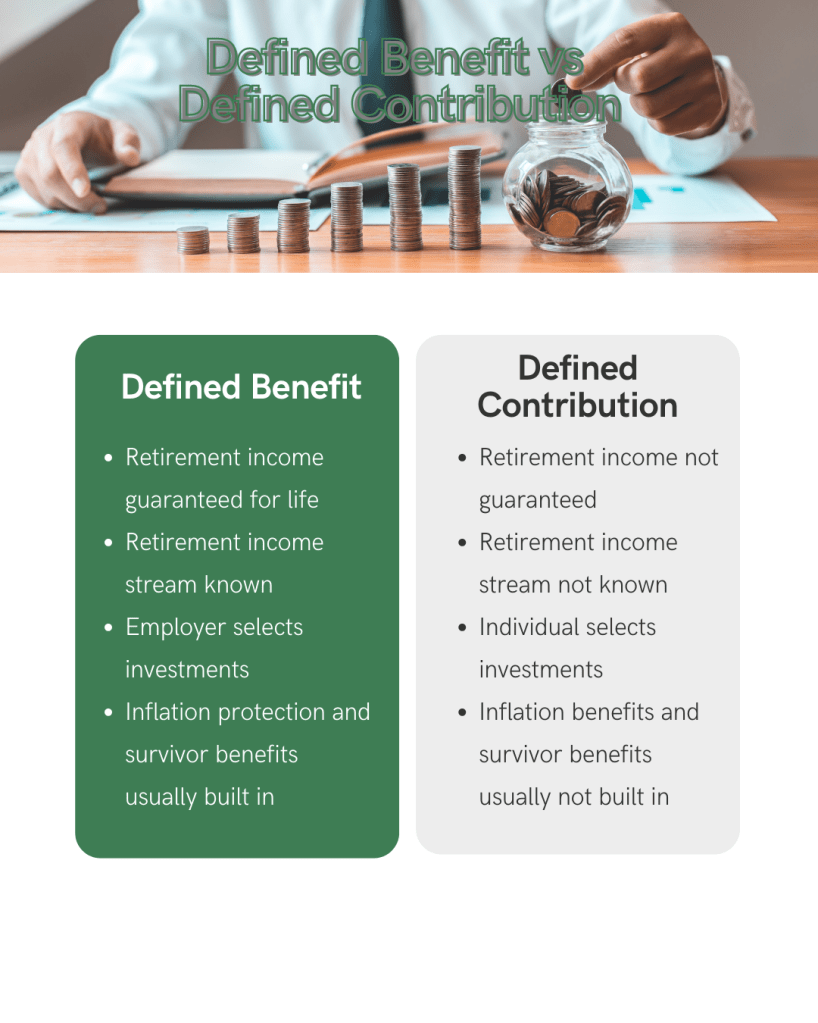
Some of the differences across pension type

Defined benefit pensions are usually linked to the length of service in the company, so it can feel pretty small or silly, but it all adds up. The greatest benefit to defined contribution is that a) you can choose where to invest the funds yourself and b) you can usually roll pension contributions into a single fund as you move jobs.

I have three defined benefit pensions, and one SIPP which I invest into regardless of how good my company pension looks. The figures below assume I stay in my current job for another two years: many defined benefit pensions require a minimum stay with the organisation. So how do my pensions look?

  Transfer valueAnnual guaranteed
income retirement
Defined benefit pension 1 £          62,304 £            6,250
Defined benefit pension 2 £          39,462 £            1,400
Defined benefit pension 3 £        104,864 £          15,266
  £        206,630 £          22,916
Self Invested Personal Pension (SIPP) £          44,075 £               400
TOTAL ACROSS ALL £        250,705 £          23,316

Even a quick glance suggests that the benefit from the defined pension is better than the defined contribution on the SIPP. However – and it’s a significant caveat – the SIPP will grow with the market. Or hopefully grow, in these days, who knows.

This is where it gets interesting. Using the more traditional FIRE rule of 4% withdrawal, to achieve the  £30,000 per year in retirement I would need to save £750,000 overall. Side bar – Mustachian Calcs are great calculators for working this sort of thing out. As you can see, I am not far off from that £30,000, and indeed would reach it if I could add in the UK State Pension (caveats galore!) but my portfolio ‘value’ is only around one-third of that net worth calculation.

Definitely more on this in blogs to come. It’s both a tangled old web, and a cornerstone of what we’re trying to do here. So do come back and join me on Instagram for more.

My portfolio: what’s it made of?

I’ve been writing a series of posts about what it feels like to reach a net worth goal and also what it has made me reflect on in terms of what you actually need to retire on. This post is an exploration of my portfolio and what it means to me, both now and around next steps on planning. Do come and join me on Insta where I also look at my day to day actions and thoughts on all these things (and some more random stuff as well, let’s be honest).

So, what is my portfolio built up of?

It’s made up of three different areas, each of which has its own story and function.

Pensions £   234,973
Savings £      39,207
Property equity £    443,497
TOTAL £     717,677
Net worth as of February 2022
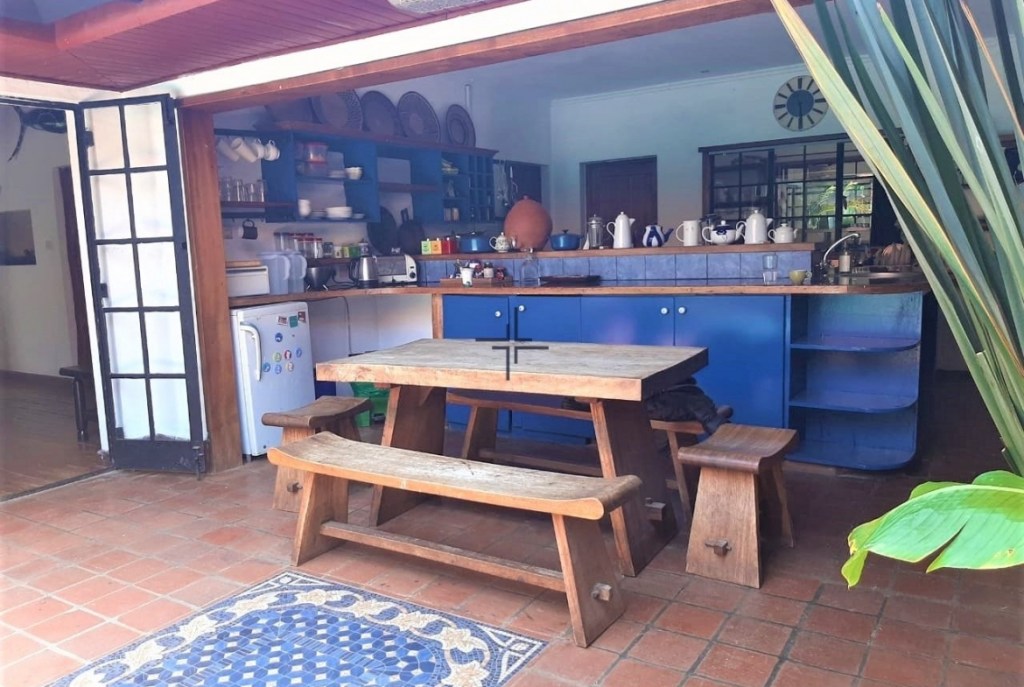
A lot of my net worth is property equity which is not really accessible but means I can dream about living in a fabulous house like this on in Nairobi…

Property

So 60% of my net worth is property equity. This is across two homes. I rented out my main residence in the UK when I got a job overseas and it is still tenanted. This means that the interest rate isn’t great (abot 4%) but I have focused on paying off this mortgage as a matter of priority. That’s based largely on my risk appetite (AKA terror of losing my job and making my kids homeless) and whilst I realise it might not be the most rationale approach to wealth building, it gives me a sense of comfort. I had a huge deposit from the sale of my previous home, so the mortgage was only £156,000 to start with and I have paid off £111,000 in the past six years.

This property is also my only passive income stream, bringing in £1,250 gross, or about £900 net of all costs since I have a letting agent manage it and of course have to ensure that everything is in good working order.

My second property is the home that we live in in Denmark. I wrote a lot about the decision to buy, and then about freaking out about the cost of property here but on balance I still think it was the right decision. Aside from the ridiculous cost of rent, the housing market is crazy at the moment and I have friends who cannot find places to rent. So again – it’s not just a financial decision but one about stability.

I don’t try and overpay the mortgage on this house. Partly because it’s so huge I just won’t make a dent, but also because we will sell this when we move country again. So since housing is a significant monthly cost, I just pay it and hope that I get a return on investment that is better than paying rent to someone else.

I am interested in having more of a property porfolio but it’s so hard in the UK. I listen to a lot of great FIRE podcasts from the US and everything – from the financing, to the market – just seems miles away. There are also ethical issues, in both directions, about being a private landlord but that’s a post for another day.

Savings

The result of buying a second home though was that my savings and investments took a massive hit. I went from almost £100,000 in savings to around £20,000 which I have built back up. That amount includes my emergency fund of £10,000 and the rest is in a stocks and shares ISA.

This is the area that I really want to focus on as there is so much room for growth. I also feel very property heavy in terms of the portfolio overall, and it’s money that just stays tied up.

Whether you’re saving for a rainy day or a cloud forest holiday, this is the most flexible part of your portfolio. Photo by Vlad Bagacian on Unsplash

Pensions

So this is the confusing area I think. Most of the FIRE community talks about total pension pots, and for me that is around

But the majority of my pensions are defined benefit which works totally differently. Have a look here for a simple explanation but basically, defined benefit means that the pot doesn’t really matter: what I will receive as a pension is guaranteed. This is a great place to be in lots of ways, though it is limited in terms of flexibility. I can’t, for example, decide where those pensions are invested. But in terms of security and planning they really work.

So what is interesting is not so much the overall pot as how much each one will pay out in retirement. The figures below show both the current pot value calculated as the transfer value (what I would get if I cashed out or wanted to move it) and also what it’s scheduled to pay out. All of the defined benefit schemes pay out when I am 67, so I also need to focus on what could be quite a long period to bridge if I want to retire at 50.

One thing to note is that the third pension pot will pay that out if I carry on contributing at this level for another two years – if I leave the job before then, they just pay me out the transfer value. So I need to stay here at least a bit longer!

PensionsTransfer valuePension on retirement
TOTALS £ 234,973£23,316
 SIPP £ 42,983£400
 Defined benefit pension 1 £ 39,462£1,400
 Defined benefit pension 2 £ 62,304£6,250
 Defined benefit pension 3 £ 90,224£15,266

You can see from this that they aren’t all equal. Each one has a totally different rate of return.

It does make me question the value of investing in the SIPP, as works out as a 1% rate of withdrawal which doesn’t seem that smart. Once I lock in my defined benefit pensions, I might stop this one and focus on saving and investing in other ways.

So that’s it. There are other very small pots in there like crypto but these are the real pillars of my financial plan. I do need to think about rebalancing them but for now I will end on a picture of the kitchen from that same house – because dreaming big is what it’s all about.

Kitchen goals