In my last post, I was focused on making changes you can be grateful for as you grow older. But as Valentine’s Day came around, I have also been thinking about the expectations we have about others and what generosity looks like as a mindset. Last year around this time I wrote about financial inequalities for single parents so perhaps this represents personal growth? Or maybe February is just the kind of month for reflection.
On thinking and writing about this, I realised that making and keeping commitments to myself are an act of radical self care. Removing the anxiety around whether I will or won’t do something, and removing the restlessness that comes from leaving all possible options open: this is a pathway to peace.
What this also means is that when others don’t fulfill their commitments to me, I take it badly. In previous posts about this it was important to recognise that I am not always reliable – far from it – but if I have committed to do something, whether a basic act like call you, through to something more existential like ‘have your back’, I am all in.
I don’t even quite know what I want to say here. But there is something nagging in my mind about the kind of behaviours we accept, and what that does to our self esteem. If I expect high standards from myself and feel like making commitments and sticking to them show respect and value, then I try to live that in how I treat people. If I don’t get that back, does it mean that people are treating me poorly or does it mean that I am not open enough to have people show up authentically?
Likewise, if gift giving is part of my ‘love language’ (hate that phrase but not enough to not use it as shorthand) and someone isn’t willing to bend to those needs is this someone who will always disappoint me? Or a situation where I am pushing someone to be too different from who they are?
And if I am able and willing to create so much space for other people’s authenticity why wouldn’t I expect the same willingness, and a compromise and sense of joint value where we navigate this so it works for us all. So everyone is in the same boat instead of just one person being prepared to compromise their needs.
This isn’t about romantic relationships though Valentine’s Day would have us think that is all there is in this world, it’s about how I show up and what I need from others. And clearly I don’t entirely know. But I hope to work it out.
I was inspired this week by a Twitter post by Dan Go on ‘things I’m doing at 43 to avoid regret when I am 73‘. I am 43: I don’t like regrets. The guy writing is a fairly traditional motivational coach of the kind where I doubt we would have much in common, so I thought I would come up with my own.
And whilst this account isn’t on Twitter we are definitely on Insta: come and join us, the water’s lovely!
So these are the ten things that came to me, most of which are not a surprise. All of them have simple things that can be done today, or this month, and all of them will help you not just in 30 years time but right now in terms of living in your peace.
Work out what matters to you. Everything else comes from this. You are old enough now to know what matters to you, and to go out and live it. Where there are perceived tensions, this can be awkward, but really they are rarely so dire as to make things impossible. And think about it in terms of your top three since as Brené Brown says, more than three priorities is the same as admitting that we can’t actually choose. For me the three priorities are my kids, my community, and social justice. But it can be anything: your faith, your family in a larger sense, or something granular like running or gardening which gives you the kind of mental and physical strength and peace to deal with everything else. It really doesn’t matter. But it means you have a kind of north star to come back to if you are feeling off-course.
Make commitments. Look, you get to decide what you want and what you don’t (and if you are a guy, I might have just lost you with this one). But the older I get, the less respect I have for the emotionally immature reluctance to commit. It’s not just about intimate relationships, but with everything. Being half-assed means getting half-assed results. That will be true whether it means you are hoping a relationship with a partner will grow positively whilst you also try and enjoy keeping your options open: or whether fear is making you self sabotage with how you do your work. Instead of seeing commitment as a threat to your freedom, see it as a way to aim for depth instead of breadth. You might be amazed.
Learn to deal with hard things. In Dan’s post he talked about learning to deal with grief, which is a critical on especially at this time in our lives. But we all have our stumbling blocks. Knowing yourself better is a great first step: understanding that you struggle with conflict, or shame, or whatever means you can look it in the eye and try to learn new mechanisms. It’s not enough to stop there though, and just get into an anxiety spiral when hard things are coming up. Work through them, knowing that crappy things will just be crappy, but they will no longer be impossible.
Get financially secure. So my whole blog is pretty much about this, but to me it’s not a priority because it’s a mechanism which allows me to focus on the critical issues. But paying off debt, organising your finances and mindfully allocating your money toward your priorities really does set you free to focus on other things. If you don’t know where to start, check out my three introductory posts: getting started, auditing your fixed costs, and paying yourself first.
Take time with people who might not be around for long. This might well be your parents – and with the total uncertainty of life and how hard this year has already been – it could be anyone that matters to you. Spend time to really understand them, ask the questions you might want answers to in the future, and make your peace with any lingering anger or resentment.
Take care of your body. At 43 I can see that the careless disregard I have always had for my body – I mean it’s just there, it looks ok, what’s the issue? – will in years that might be coming very soon, result in challenges. There is endless advice out there about how to exercise, what to eat, staying healthy blah blah and none of it turns me on at all. So this one is a simplified version: to treat my body like a precious and rare commodity, since that is what it is. That means making those regular appointments at the dentist or GP; taking some basic care over what I eat, how much and when; and getting some exercise in. Some of that is easier than others, but none of this requires me becoming a world class weightlifter, just having one less slice of cake. And recognising that life is guaranteed to nobody (see point above…) might help focus on this.
Make a plan, and go for it. So thirty years seems like a long time. I mean, I was 13 thirty years ago: and now I have a 13 year old. But being clear where you want to go matters, and more at this age maybe than any other. I don’t want to work for another 25 years (which is what the UK State pension age qould require) but that means really working toward an alternative. I don’t want to be a burden on my kids in terms of my money or my health – I mean I will totally rely on them but that’s part of our cultural norms, I don’t want to have to – so making sure that I work on these now is critical.
Protect your energy. This might mean cutting off toxic people, or it might mean dealing with a sticky issue which has been nagging away at you. For me it means trying to be less negative and speaking out rather than resenting things. But it also means saying no to certain situations where I feel obliged to be spending time with people that I don’t really get any value from. Being able to prioritise protecting my energy over fulfilling social obligations feels like a gift.
Do what you love. OK so you might not be able to do this instead of your day job (or not yet) but doing what you love really does matter. Doing activities you love is part of dementia prevention: hobbies help us keep mentally stimulated without pressure, generates a sense of achievement and goal setting, relieves stress and builds confidence. So whether it relates to exercise and keeping healthy, or you do jigsaw puzzles, write a blog, paint in your attic, or whatever, do it because you love it. Note: partying doesn’t count: dancing totally does.
Work out what needs to be in place if you pass away. Yes make a will, but also prepare your executors. If you have kids, work out the details of guardianship for them and if they are old enough, prepare them for what would happen if you passed. Organising your money into a Trust, along with simplifying and preparing a guide to all the paperwork will make things so much easier for everyone at a time when they will already be devestated by losing you. Which, God willing, will be much after you turn 73!
I like to start the new year with a stocktake of how my finances are doing and whether my savings and investments went according to plan, then using this as a prelude to setting some plans and goals for the coming year. This isn’t the only focus for the year, so check out future posts to find out more about setting intentions, vision boards and the like. But it is a good way of gathering some baseline data to see where I am starting from.
To say 2022 was a tricky year financially is a massive understatement. Whilst the economy globally seemed to be strengthening post-COVID at the start of the year, the invasion of Ukraine in February turned a lot of the world’s certainties on their head. Prices started to go up for petrol, food, energy, leading to massive cost increases in the basics for most households.
This trend has continued throughout the year, with supply chain issues as well as scarcity in some areas leading to a crisis with the soaring cost of living. I feel like I’ve been writing about this all year: 92% of adults in the UK have reported an increase in the cost of living, with 60% saying they are ‘very concerned’ about their ability to cope with additional rises. Food banks in the UK had to distribute more than 1.3 million food parcels in 2022, an increase of 50% since pre-COVID figures. I recognise that whilst financial freedom remains a critical goal in my life, so many people are getting closer to the financial precipice that they really need to get support, and get it now.
Inflation also grew at a significant and rapid rate, hitting almost 11% in the UK by the end of December. For many people, including me, this had an immediate impact on mortgage interest rates, biting even deeper into the daily costs of getting by. Whilst the expectation is that inflation has now hit its highest point and will start to reduce in 2023, the impact (and uncertainty) of these shifts are real.
It has also been a shaky year for the markets. Again an understatement, with the Financial Times headline for the end of the year reading Stock and bond markets shed more than $30tn in ‘brutal’ 2022. Markets in the US had their worst year since 2008 (and we all remember what a brilliant year that was). Whilst I love FIRE and the focus on both balancing for risks, and keeping your head in the event of a downturn – and I have definitely moved on from panic selling in 2020 – it has felt like another rollercoaster ride which just hasn’t been that fun.
This has also been the worst year in terms of growth for my own portfolio. I made some major changes this year (more about this in future posts) to rebalance away from being over-invested in property, but continued to invest throughout the year in mutual funds and my pensions. I added in kids’ savings here which I don’t normally do, but as they are starting to get older I need to come back to my financial planning for them, and make sure I am adjusting as needed depending on their age and stage.
My investments this year came to almost£80,000, though some of this came from my property sale meaning that my investment from salary alone came to £50,000. I am extremely proud of this figure and what it represents in terms of prioritisation and tenacity. Since I have been working on myself over the last few years, I can feel that pride at the same time as recognising that my salary and privileges mean that I am in a very unusual and blessed position.
2022 Contributions
Personal pension (SIPP)
£ 8,600
Savings (stocks and shares ISA, emergency savings)
£ 31,000
Work Pension (pre-tax)
£ 18,444
Mortgage capital overpaid
£ 5,000
Kids’ savings (JISA, J-SIPP)
£ 16,000
Contributions
£ 79,044
Next steps for me are to do a review of my net worth (and realistically to not compare it to a US$ amount as I traditionally have – with the recent forex issues, this is a pathway to sadness) and set out some plans and goals for 2023. Whilst I do that, I will just continue to save and invest as usual, and get ready for what is hopefully an easier year for us all.
Look forward to hearing about your 2022 and how able you were to follow your financial plans given that major challenges during the year.
This started off as two totally different posts but for whatever reason, I ended up wanting to talk about the cost of having kids. Clearly feeling grumpy about it!
Having kids is a huge fianancial commitment whether you are single or not: even a married mama will earn one-third less than male counterparts by the time her eldest is 12. Very often people focus on the cost of having kids in terms of the things we need to buy for them, which is honestly by far the smallest part of the equation. Lots of places list out the things you’ll need and how much they might cost but it’s not rocket science, and with the rise in great second hand equipement, doesn’t need to break the bank. I bought everything second hand (other than a car seat because you can’t guarantee it hasn’t been in an accident which migth render it useless, and cot or Moses basket mattresses since you there is a small chance that using a second hand mattress from outside the family increases the risk of Sudden Infant Death Syndrome or SIDS).
Which is kind of ironic given that this wastefulness is bringing about the kind of climate change that means the lovely babies we are so proud to show off in a new outfit, or make smile with a new toy, are more likely than ever to end up living their adult lives at the sharp end of a fiery apocolyptic disaster. And even if you don’t believe in climate change (you probably shouldn’t be on this blog to be fair) or don’t care, the sheer wastefulness in terms of money and resources makes doing things differently surprisingly easy.
Research (though I always think these things are a bit vague given the many different approaches you can take to parenting) suggests that the cost of raising a child in the UK is £193,801 for a single parent. Using that and the lack of financial support since their birth, I will have lost almost £400,000 by having children. According to some back-of the-envelope calculators, investing that in a low cost ETF or stocks and shares ISA would grow to around £700,000 in the 18 years. Add to that the reduced earning power, and having two kids has probably cost me £1 million.
Obviously, I didn’t have children to make money (child labour is illegal after all…) And this calculation doesn’t include the fact that they will look after me in my old age (which, thanks to our cultural background, they really really will). Having kids is awesome, and my two are both pretty much the best fun I ever have, as well as potentially being part of the solution to the problems my and my parents’ generation have created in this world.
Also not my kid, but a child quietly reading a book is something I fully support. Photo by Aaron Burden on Unsplash
But the cost of having children is real, and shouldering the burden alone can feel like a huge strain. Being part of the FIRE movement, where it feels like it’s predominantly white married couples who have nothing to do with my life (this was the other post I started writing) can make things feel even lonelier. But FIRE as an approach means that I feel in control or the spending and financial decisions I make, and more confident that I am creating the kind of future my kids, and I, deserve.
I just missed a week. A whole week over on my Insta and a week of posting here.
I thought about both, over and over. But I was too busy, too tired, too focused on a whole load of other issues in my life and in my head.
It was disappointing because I had a made a commitment to post – to write out my feelings and my journey, give myself time and space to think, and be there to support others. I made a commitment to just show up, and keep showing up.
These past few weeks and months have made me think a lot about commitment. As it’s such a critical part of our life journeys – financially, spiritually, at work, and in relationships – I want to write a few posts about it. They might feel a bit different to how I ususally post so I am grateful for your being with me whilst I think this stuff through.
My first question is – when do I need to choose between commitment and self care?
There is real value in committing to something, and even more in being consistent. But are there times when it is better to waver, and to just look after myself? Is it better to honour my word, or to give that time inwards to rest and recover? Does it matter how I approach that in terms of messaging, or preparation? I know plenty of people who just change their mind and their plans at the last minute, sometimes for good reasons. Am I ok to be one of them?
This is a forked stick I come to often. This post is absolutely not about this blog, but it’s a good personal example of things that I am committed to but I don’t have to do it. I tend to write my blog on Sunday mornings, when I could be doing a myriad of other meaningful things, many of which fall under the heading of ‘self care’. I mean, often it’s getting some extra sleep after a beer or two over the odds the night before (which raises entirely different questions about how I view self care issues against areas of life which are a challenge vs over the easy, but equally impactful, decisions on going out for a drink…). But it might be getting ready for the week, taking it easy, or going for a walk with the kids. So there are a whole load of ways I can talk myself out of sitting down to write, and can validate those feelings.
So – here comes a stinger, for me anyway – a blog is such a strange creature. I know it gets read, but not so much whether anyone cares if I show up week after week. I believe and hope it adds some value, but if I stopped writing, the waves of the internet would soon wash over any castle built on this sand. Nothing would really happen if I don’t show up.
The waves will wash it all away. But what remains? Photo by Sean Oulashin on Unsplash
Which means that the most important thing about the commitment I made to writing this blog, is the commitment I made to myself.
And keeping these promises, without external accountability, are the hardest ones.
Whether I tell you I will meet you for lunch, water your plants, call you on Wednesday, or love you forever – unless something completedly unexpected happens, which it rarely does – I will do it. There are many people not like this (again, a whole other post) but for me, if I say it, I mean it. If I have said the words, you can expect the action.
But I don’t give myself the same kind of respect. If I tell myself I will wake up at 5, stop smoking, get fitter, or love myself forever – these are all totally negotiable.
Which leads me back to the question on how to make decisions between commitment and self care. And over the past few weeks I have concluded this: making and keeping commitments to myself are an act of radical self care.
I am not sure why this feels like news. I mean – this is the basis of a financial independence journey, right? Committing to a vision for a future and regular acts which will create that, are exactly in this space. Nobody else cares if I do it or not. Nobody is impressed if I succeed. Nobody goes hungry (sorry, kids, you will have to get yourselves through college though) if I don’t. But I have such devotion to the belief that God made me to live and contribute through my best life on this earth, and faith in that plan, that I do it anyway.
What is confusing for me is why I struggle with this message in other parts of my life when the core remains absolutely the same. When I have made an agreement as well as a commitment – whether that is to go to work and do my best, or how I try and act as a mum – I can stay in the zone. When it comes to things which feel more optional, especially good habits and high expectations around health and relationships, I find it much harder to be so consistent. I don’t know if it’s a need for results, or a need for reciprocation (or, frankly, whether I need therapy) but everything else feels more fuzzy. More optional. Perhaps I have less faith in how things will turn out. And that is defining how, and if, I show up.
Foundation stones, and building up. Or give up and throw them in the waves? Photo by Zdeněk Macháček on Unsplash
I’ve been thinking a lot about comparison recently, and it really is the thief of joy.
This weekend it was Shavuot, the Jewish festival which celebrates the giving of the ten commandments. The tenth commandment is about not coveting what others have, be it their ass, or their wife’s ass (see what I did there??) Whilst this makes sense from the perspective of discouraging jealousy and conflict in a community, it also strikes me that there is something in there about not comparing yourself to others and finding yourself wanting.
Comparison is the thief of joy because it diminishes your own space, achievements and uniqueness. It also sets up a narrative in which whatever you have is not enough, and that leads to a lack of gratitude for the space you are living in.
I absolutely loved Paula Pant’s recent podcast episode with Molly West Duffy talking about how to keep your feelings, and particularly your envy and covetousness, in check. Whilst it might seem obvious that these emotions are not a good place to live from, the podcast talked specifically about ways of ensuring that – even if you are feeling those things, as we all do at times – they are not driving your decision making.
Their cup might be bigger, but maybe yours is just perfect for you? Photo by Vanesa Giaconi on Unsplash
To me, part of what mindful living means is remembering that it’s ok to have moments where you feel covetous, or envious, and forgiving yourself for it. But it also means moving on from it quickly, and not letting it cloud my judgement. I sometimes compare my life now to what it could have been if I had done things earlier, and that’s not a very helpful line of thinking. Being grateful and present for how things are, and planning for the future, feels like a much better way to approach things and reminds me to stay focused rather than comparing myself with others.
I’ve had lots of topics in my head this week to write about – the possible impact of inflation in investments; how to get started with real estate; my tax return (I am SO MUCH FUN at parties). But sitting here this Sunday morning I just feel – crappy. It’s been a busy few weeks but it has felt sort of like a deflating balloon: handing off at the end of my temporary promotion (after almost nine months of working my ass off); hitting some financial walls that I wasn’t expecting; finding it hard to get the enthusiasm together to plan for the summer, which should be exciting but I. Just. Can’t.
I mean, really. Consider how many people in your life ask this question becuase they care about the answer. Credit Finn /Unsplash
I feel lonely. And that’s a difficult spot to be in and stay motivated. There is something about having to constantly be my own cheerleader, my own auditor, commentator, coach, tiger mom or whatever else is just exhausting. Right now, nothing is motivating me enough to play all these roles and keep myself on track. I want to just lie down in a dark room – and unless I can pull myself out of it and get back to a place of peace, that is exactly what I will end up doing.
It is also hard to accept that when you start growing into your self, you leave people behind. The simplest antidote to loneliness feels like it’s company. So we go and hang out with those friends at the bar, take someone home for the night, get into social media scrolling. But all those things feel so empty that they can make the loneliness feel worse – make you feel like you are creating white noise instead of real connection, to distract yourself from doing the hard things.
Somewhere between these two things is where I am spending a lot of my time at the moment. I’m struggling with my own judgement about what matters, who to trust, and how to voice my needs. Honestly, I am scared that the depth of my need for closeness means that I am prepared to overlook a lot of small things which are flags that there are people who aren’t really that bothered about me after all. And I just don’t know where to go with that at the moment.
I wrote a post in January about loneliness, how it is more common than even, and the impact it has on our well-being. In that post I focused on three strategies for mitigating the feelings of loneliness and finding the kind of peace which acts as a foundation when things get rough. The first was building a stronger community, whether with family or friends, all the other Sunderland supporters you can find (good luck with that) or the girls you play Roller Derby with. My second strategy is around focusing on the calendar. Having rituals or activities which mark the passing of the seasons – from new year’s resolutions, spring cleaning, or The First BBQ of the Summer – makes me feel more like an active participant in something positive. Finally perhaps it’s about learning to listen, and to be heard. Building meaningful connections can take time and can be challenging – especially if you are feeling low – but it’s really worth it.
The JFK quote above though is also a reminder that finding peace, which is the first step to pretty much everything else really, is a transformational process even at personal level. It means taking down walls, building up new boundaries, reframing pathways and just keeping on going with the constant shift. This article about the habits that people give up on the road to peace was insightful and is helping me think about my own reactions. It talks about moving away from toxic people, from comfort, from the pursuit of perfection or impressing others, or from holding grudges (this is my own personal favourite).
But even though it sounds obvious, transformation is hard. Growth is painful. Moving away from people, and having that level of certainty in yourself and your pathway, can be lonely and exhausting. Thinking about where you will be in five years might be the right approach when you’re struggling to keep going, but if you’re doing that whilst watching people you have moved on from have The Best Party Ever on IG then it can feel like a fictitious bargain made only in your mind. I have days like today when I forget how these feelings and challenges show up, but I know that I always get through them, however crappy I feel for a little while. It’s ok. We got this.
And if it gets on top, go somewhere that reminds you of the powerful certainties of this world, and get it back into perspective. Photo by frank mckenna on Unsplash
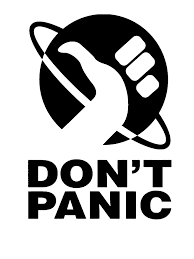
TL:DR – don’t panic! Whilst I’m not the Hitchhiker’s Guide to the Galaxy, those two little words do have to give particular comfort. Especially without the exclamation mark, which suggests that panic of some kind is right around the corner. But it’s Sunday morning, and I am three coffees in and heading to a kids’ birthday party once I’ve written this, so perhaps I need the drama. But whatever you do, don’t let your panic define your actions.
This week I have been thinking a lot about doom and gloom. More than usual, in any case. I wouldn’t say that I have Eeyore tendancies but the world is a busy, scary and sometime relentless old place these days, so a bit of doom is on the agenda. From the endless heartbreaking news from Ukraine, to the real debates about what the exceptionalism shown in that situation means for the reckoning coming for the colonialist staus quo, to the ridiculous news that the UK has a monkeypox outbreak (I mean – really?): it can feel like the only time I hear the word ‘positive’ is when a friend does a COVID test.
Really don’t, even if you can’t hitchhike your way off the planet
But what is going on in the world of FIRE, of savings and investments? There have been a few things that struck me recently and I try to keep coming back to these:
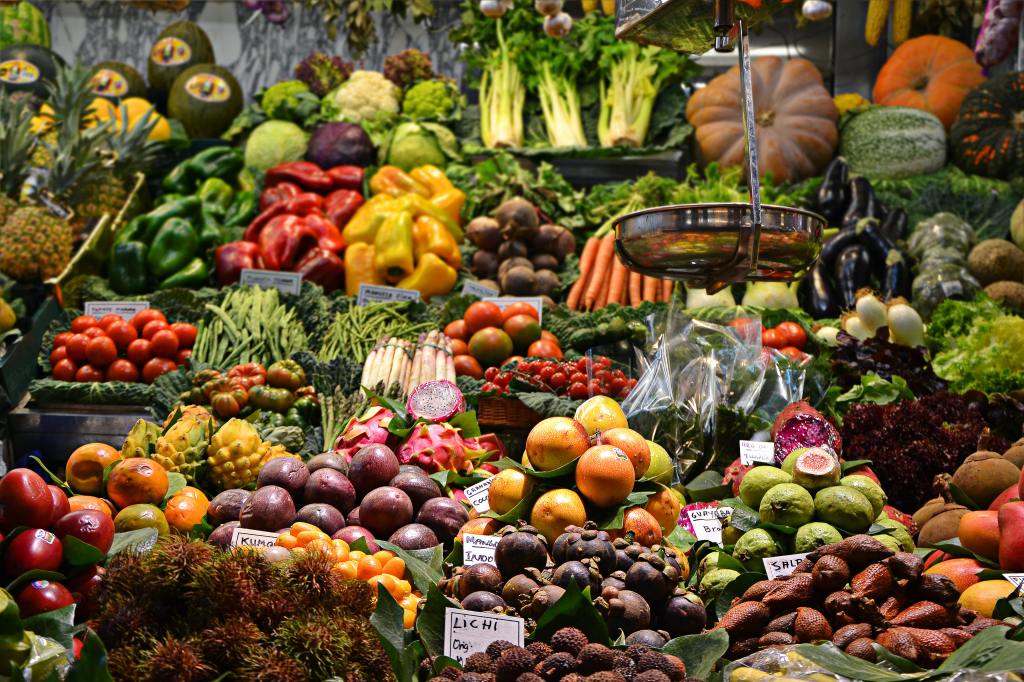
This is even more true in the world of finances i.e. literally everybody’s day to day world. The soaring cost of living, shortages of fuel, eggs, potatoes or whatever is real. Every time I go to the supermarket there are empty shelves, and shelves full of things at a price that I am not willing to pay. In the UK, the price of cheese (CHEESE!) has gone up by almost one-quarter. Once the costs of Marmite and tea start to spiral out of control we will all be shafted, frankly. (Denmark is powered by licorice and pork products, neither of which we eat so I focus all my crazy-hoarder-lady issues elsewhere).
Beautiful! But can you afford any of it?? Photo by ja ma on Unsplash
Plan for the worst, then remember this is what you did. My Crypto portfolio has totally crashed. In the last two weeks, more than $300 billion has been wiped off the value of Crypto overall, so this is not really a surprise. There was real panic that Coinbase was going to go bust – and take people’s money with it. Whilst that didn’t happen, Luna, a popular Crypto token, did, taking $40bn with it. My reaction has been to do absolutely nothing. I refuse to look at my portfolio other than on the twice-monthly date I always look at it. And then I refuse to act or worry about it. This is based on the fact that when I invested in Crypto, recognising that it is high risk, I did so only with what I consider to be beach money. This is money where if I lose it, it means not taking the kids to the beach in the summer, rather than meaning I can’t pay the rent. So when I freak out about losing it all in Crypto, I try and thank my previous financial planning self, and then just not worry about it.
Remeber you are not a mystic. Don’t make decisions based on crystal ball gazing. The thing weighing much more on my mind is house prices and whether they will crash. And this is also one where my attachment to my net worth is at odds with a moral sense that rapid house price increases really are shafting those less well off in a way which will impact on generational wealth for a long time to come. The reason I put this one under the heading of trying to predict the future, is because a) we really don’t know and b) none of the ‘experts’ can agree. Whilst there is a general sense that the market cannot keep rising, particularly in light of inflation and changes to mortgage interest rates, there is no evidence at this point that the housing market is actually slowing down. I’ve been thinking about selling my house in the UK to diversify my assets but I need to make this decision on a range of factors – none of which is whether I can guess the future.
Use this time to deep dive into your risk tolerance and decision making, rather than wanting to act. In March 2020, I panicked, and sold out a significant chunk of my investments. This was based literally on being inexperienced, and freaking out. I wrote a lot about it at the time, both the why and the results. This has definitely impacted on my holdings now but I have to chalk it up to an experience that I needed to get better at investing. It also gave me space to think about what my risk tolerance really really looks like, and how I can build that in to my investing (and my life).
More next week on overall approaches to investing, but I wanted to start with some thinking – and reassurance – that however doom laden the picture is, panicking is definitely not the answer. Trust yourself, your knowledge, and your planning. You’ll survive the storm.
Don’t forget if you want more cakes/sunrises/Barbies and less doom, come and join me on Insta.
So I have been out for a while, trying to deal with being very close to burnout. Feeling better now, but taking that space was critical. I tend to keep pushing myself well beyond what is a good idea, then getting surprised when things start to fall apart. The last few weeks I have been thinking about this and about the sense of going through life with baggage – as a single parent but also in general, as we all do – with the results and scars of our past mistakes and misfortunes, fears and triggers.
This is showing up in my life in a few ways at the moment. From the FIRE perspective, for many people the concept of baggage means coming into this journey deep in debt. And not just in debt, but with the habits, choice and often value systems which led to that debt in the first place. For me as with others, it’s more coming in and realising what I have wasted in getting here and what kind of different position I could be in. But the worst waste of time would be to get stuck in those feelings instead of getting up and at it. Your time is always now.
I was talking to a friend last night who has recently become an expat, a move which has given him a bird’s eye view of his home town. Realising that the years of making just enough money to go out and kick it with friends meant living life, which was all about ‘having fun’ actually kept him in stasis for decades. Now this could be a cause for regret. But equally, our journeys are what made us: looking backward and sneering at our younger selves is not going to change the past, though it might diminish the value that we did find. Being able to make peace with whatever our baggage is – the poor decisions, the risks that we miscalculated, that person we continued to trust in spite of there being more red flags than the bunting at the Communist Party conference – is to make it manageable and be able to take that past along on a brand new journey.
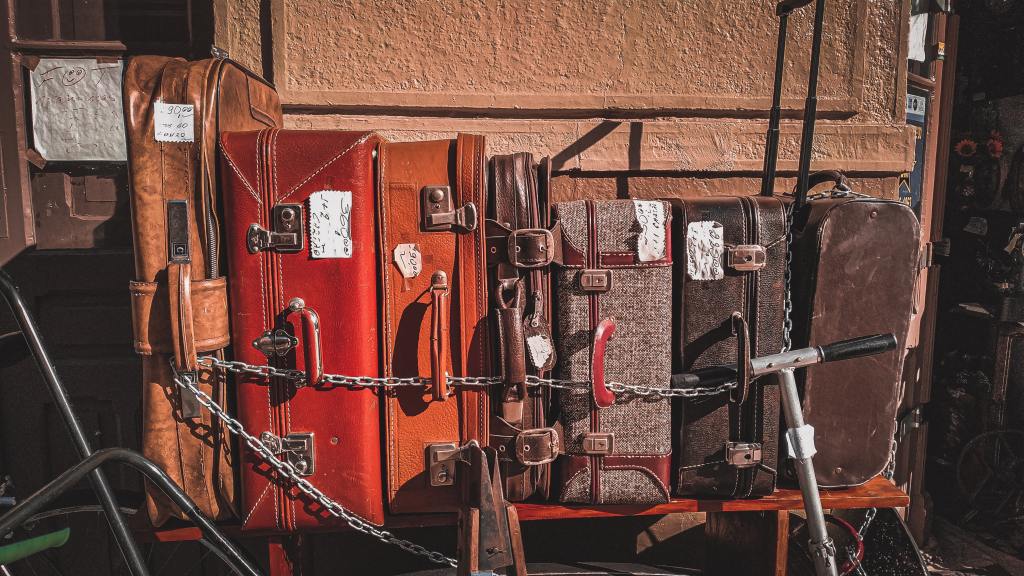
I wrote a while ago about ‘loving what is‘ – that sense of accepting and loving the present just as it is, something which is a critical step on the pathway to peace. The ability to reflect on my own triggers and limiting beliefs means that I can at least recognise them when they come up. Something like shaking hands across the divide. This is what making baggage manageable means to me: it’s not denying it but recognising my part in it, and the positives that either came through the results or through the journey. Kind of like taking a luggage trolley full of giant suitcases, feeding them into a magic vortex machine, and coming out with a little badge that you wear to remember without being tripped over by it. Or, as per my experience last week, you can just give your bags to Kenya Airways and never see them again. Either way, it works.
Making peace can be hard. It can also feel counter-intuitive in a world where – especially with FIRE, and at my stage of life – it’s all about striving. How is it possible to come from a place of tranquility and still have enough drive to get out there? The quote above from Eckhart Tolle speaks to this I think. So much of what we do is about rearranging circumstances, or the small things (or indeed the deckchairs on the Titanic) instead of rearranging how we look on the inside.
Don’t get me wrong, this internal rearranging can be just as tough as making peace. Encouraging the tectonic plates to shift inside you requires tenacity and strength. Especially when it raises questions about whether you will continue to accept the systems you have been brought up with, to live inside the structures you have internalised and all the comfortable spots you’re used to seeking solace in, however damaging.
As I start the long process of moving back to Nairobi, being able to focus on the inner work instead of the busy-work of administration, is critical. The organising bit is easy (actually it’s a massive pain in the ass, but meh) but the work on finding my peace is much harder. Who am I now, as opposed to when I last lived there? Who are my people, how do I feel about how I have moved compared to them and the spaces we find ourselves in? What are the values I have instilled in my myself and my own children and how will these blend or clash? How can I stay open to the great things coming whilst not being so attached to certain things working out that for them to go wrong would destroy me?
If in doubt about peace, stare into the middle distance. Photo by Colton Duke on Unsplash
All those questions are critical but they aren’t things I need answers to right now. Coming to them with an internal stillness and certainty gives a certain protection both from the intensity of negative results and from freaking the F out. That has to be worth it.
No blog post this week, apologies. If you have been over on my Insta then you will have seen that I’ve been busy both dealing with, and coming to terms with, some family stuff.
This week is also Pesach (and Easter and Ramadan) and the school holidays, plus I have a ton of work on so overall, it’s a lot. But it has been an important week for me thinking about all the things that really matter to me, to us as a family. Not just in terms of what the future holds, but what holds us.
Wishing you all a great and peaceful week. See you on the flipside.




















 Brilliant Ladies' Handbag Club